About us
Gecai Culture stands at the forefront of bringing the past to life through our state-of-the-art Animatronic Dinosaurs, enchanting Animatronic Creatures, vibrant Chinese Festival Lanterns, and tailored Custom Products. As a professional manufacturer nestled in the heart of China, we harbor a deep-seated passion for showcasing our lifelike dinos and animals in museums, exhibitions, zoos, parks, and beyond, aiming to kindle a flame of curiosity and learning in people of all ages.
Get a free quote
Company News
From Skeleton to Skin: How Realistic Dinosaurs Are Made
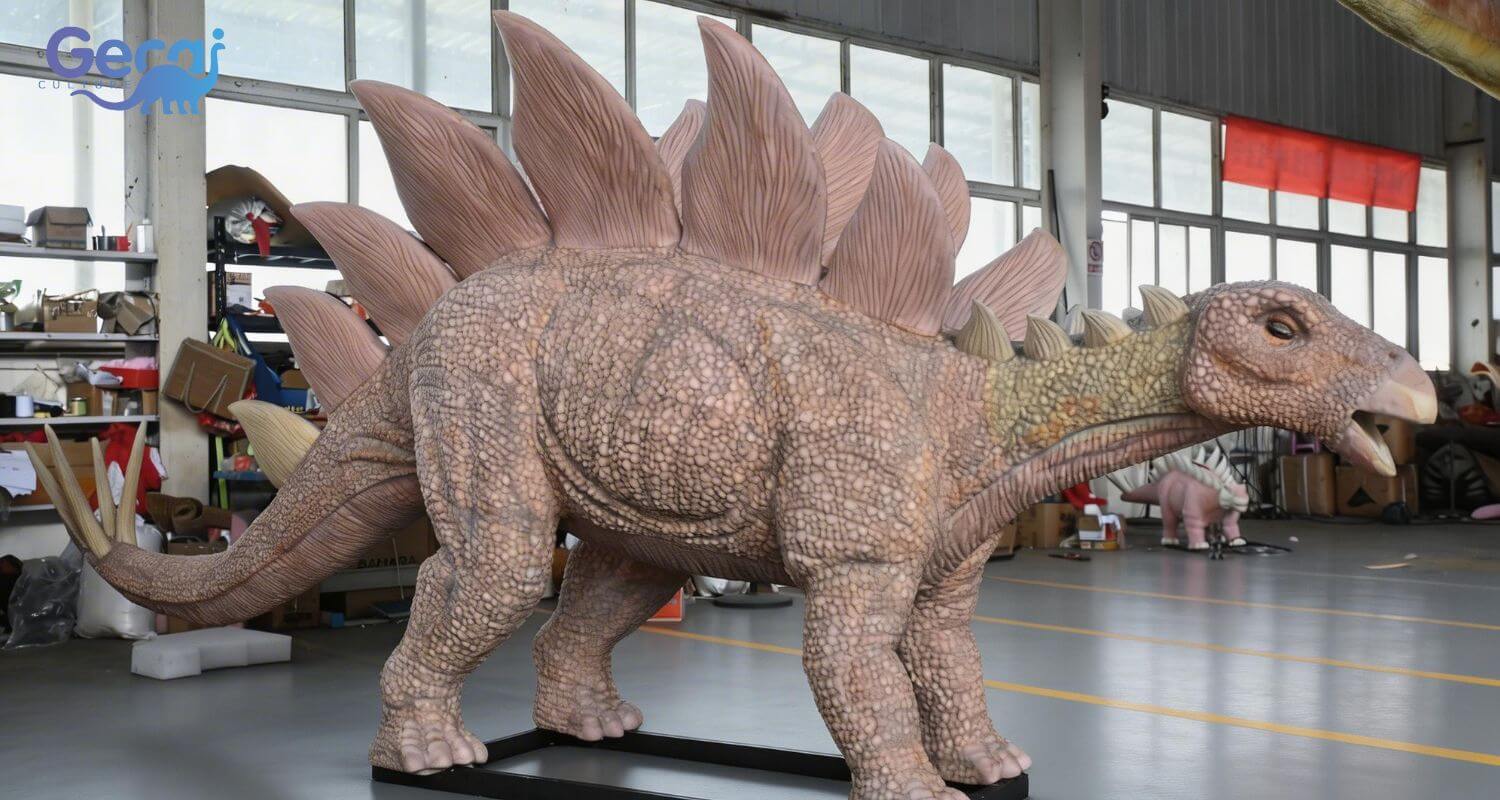 Creating a lifelike animatronic dinosaur is a carefully controlled process where engineering meets artistry. Every detail, from internal structure to final paint, is executed in sequence to ensure realism, durability, and long-term performance.
In this guide, we walk through the actual factory workflow, from steel frame to finished dinosaur.
1. Steel Frame Construction: The Internal Skeleton
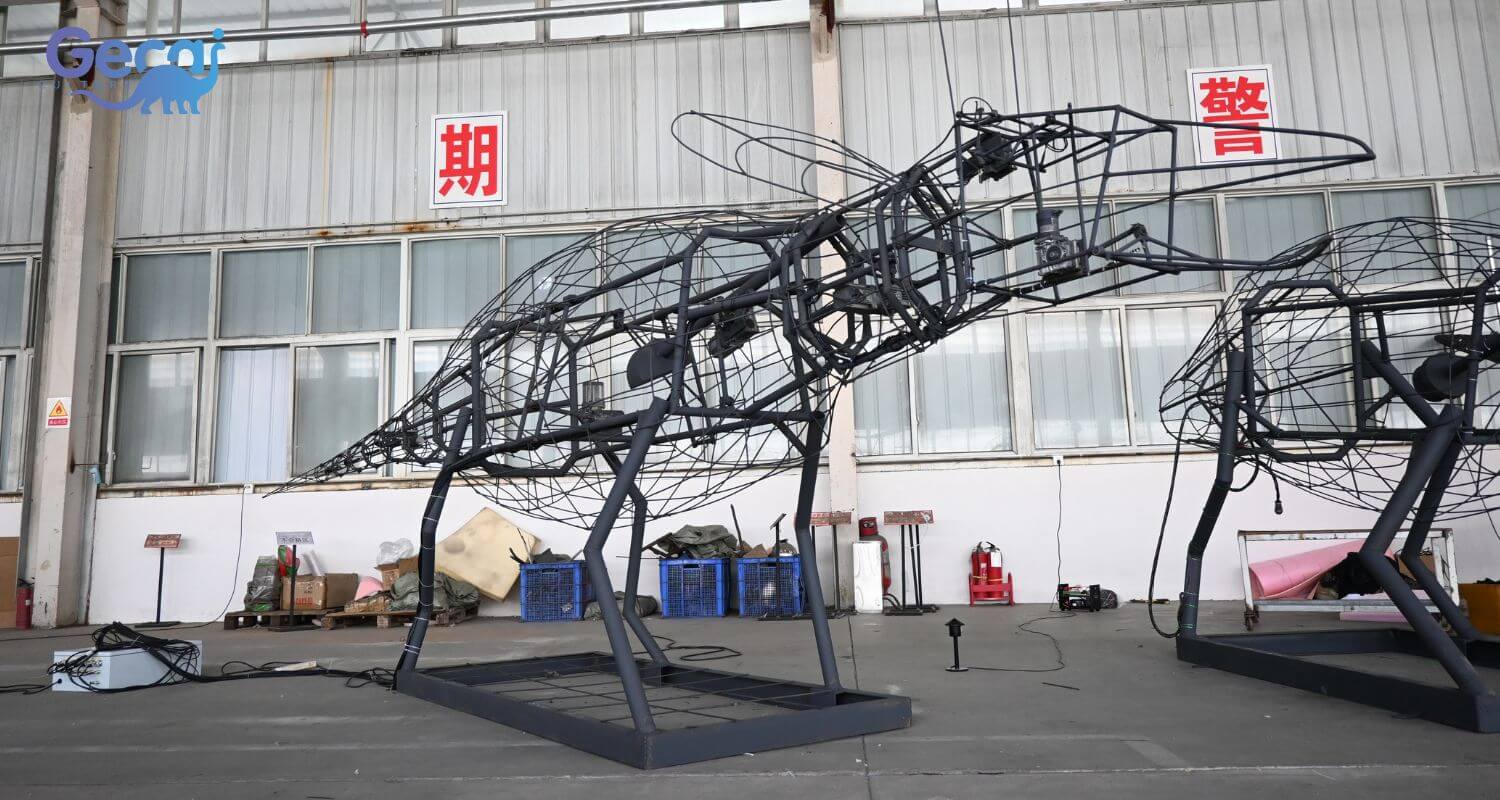 Every dinosaur begins with a custom-built steel frame, which serves as the structural backbone.
Key Features:
High-strength welded steel structure
Designed according to size, posture, and movement needs
Reinforced load-bearing points for stability
Anti-rust and anti-corrosion treatment
This step ensures the dinosaur can safely operate in demanding environments like theme parks and outdoor exhibitions.
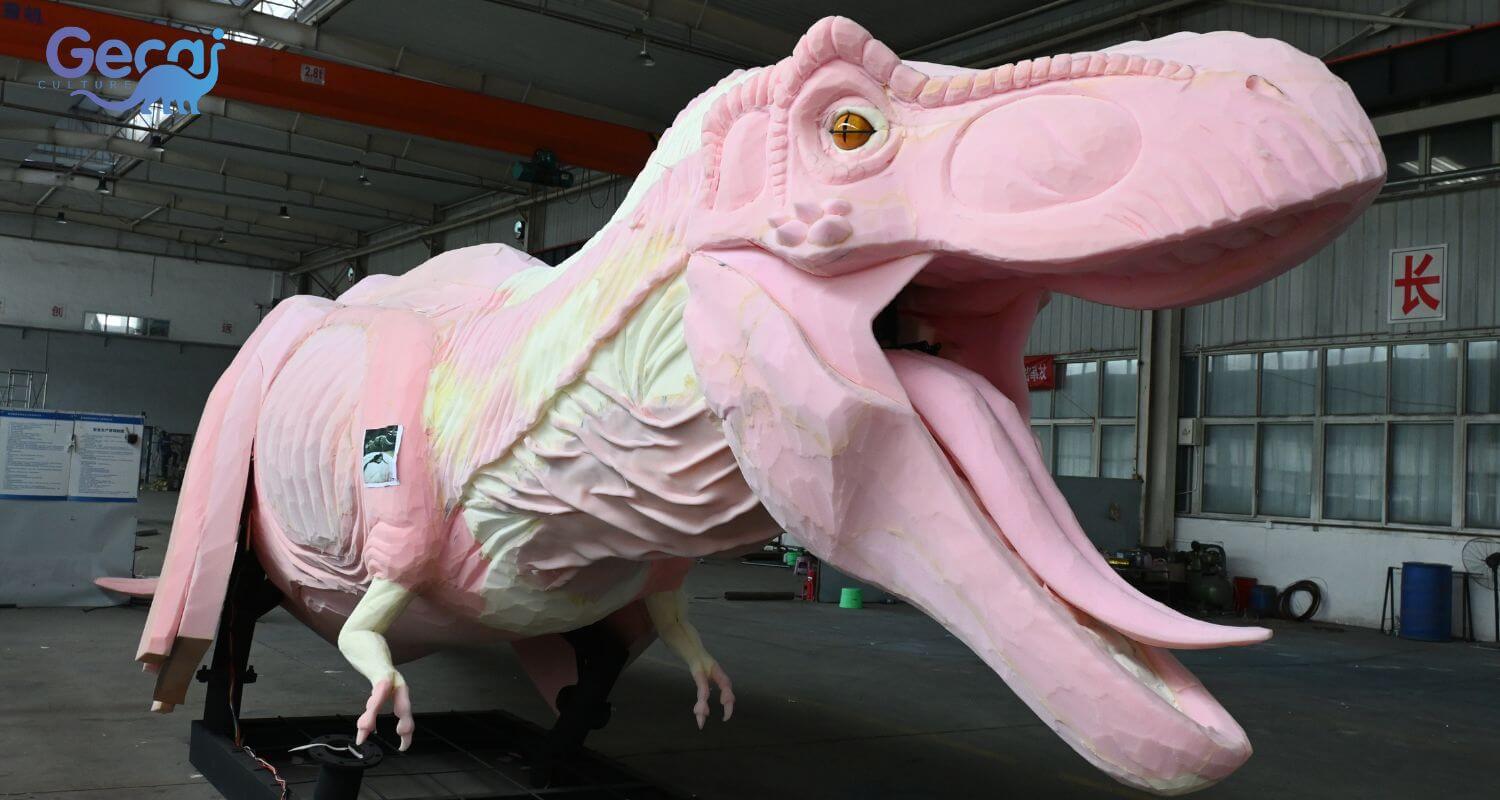
2. Foam Sculpting: Building the Body Shape
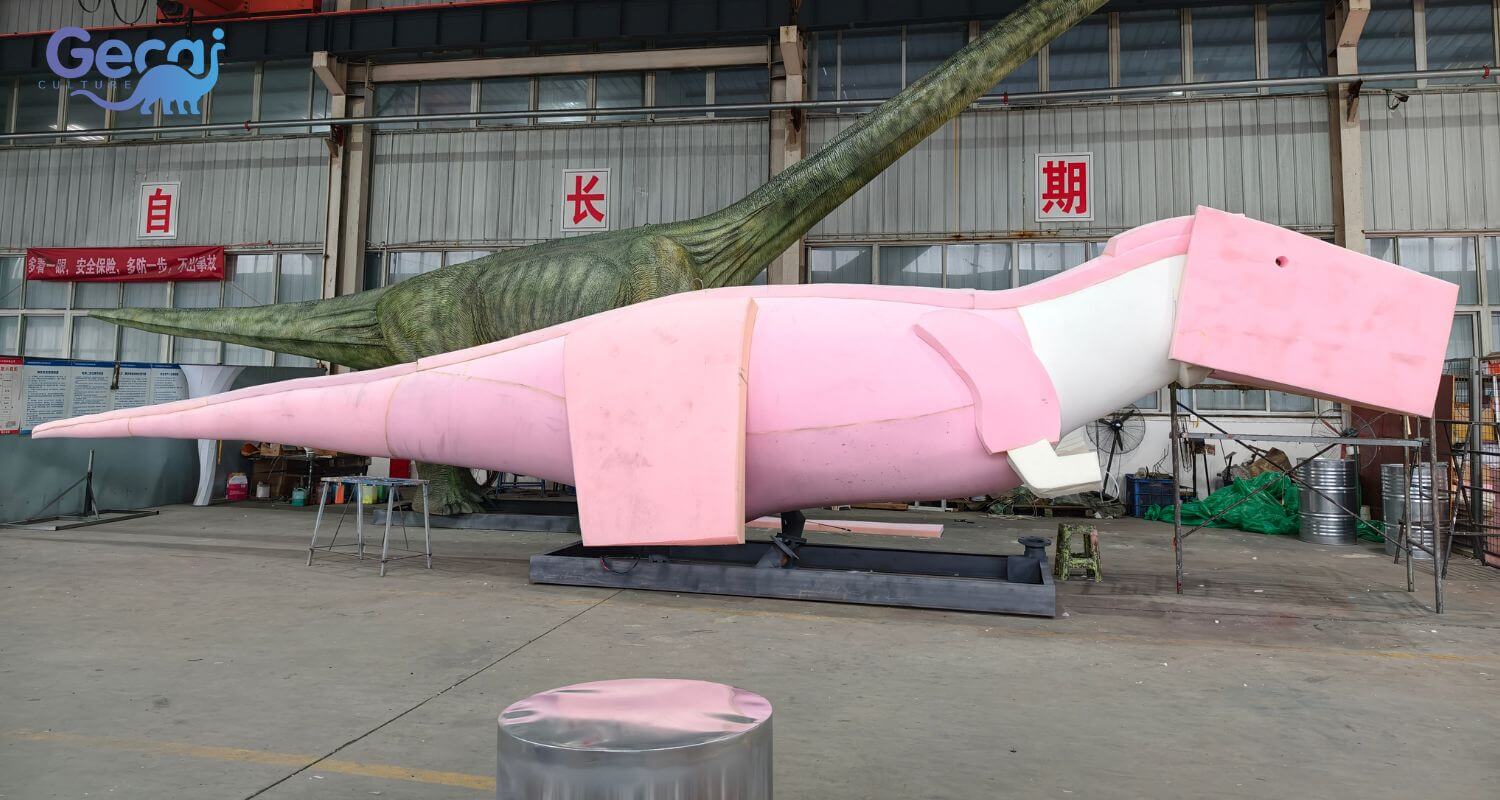 After the frame is completed, technicians apply high-density foam to form the dinosaur’s body.
What Happens Here:
Foam is layered over the steel structure
Hand-carving defines muscles and proportions
Key features like head, claws, and tail are shaped
At this stage, the dinosaur begins to take on a realistic three-dimensional form.
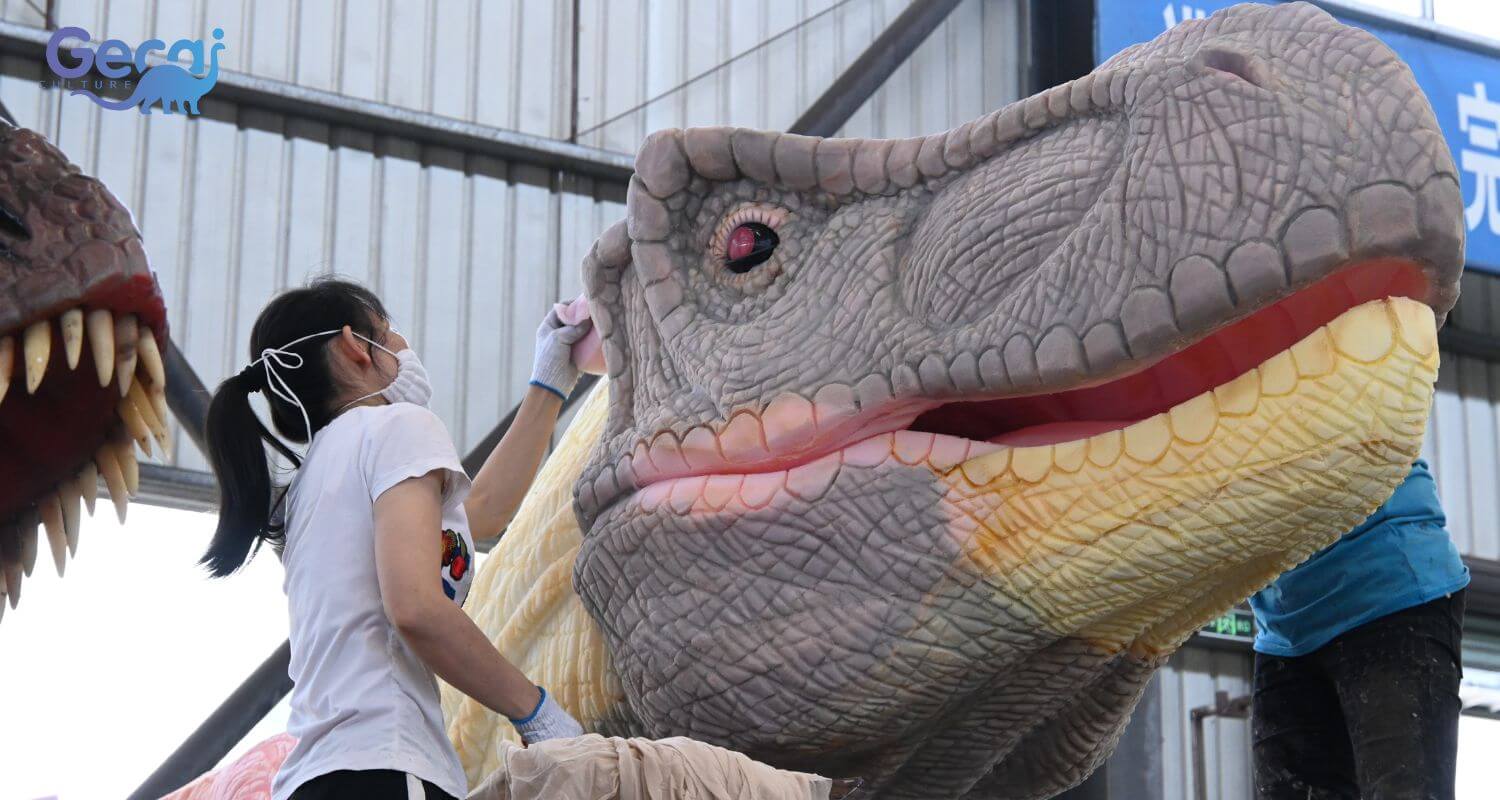
3. Texture Detailing: Crafting Realistic Skin Patterns
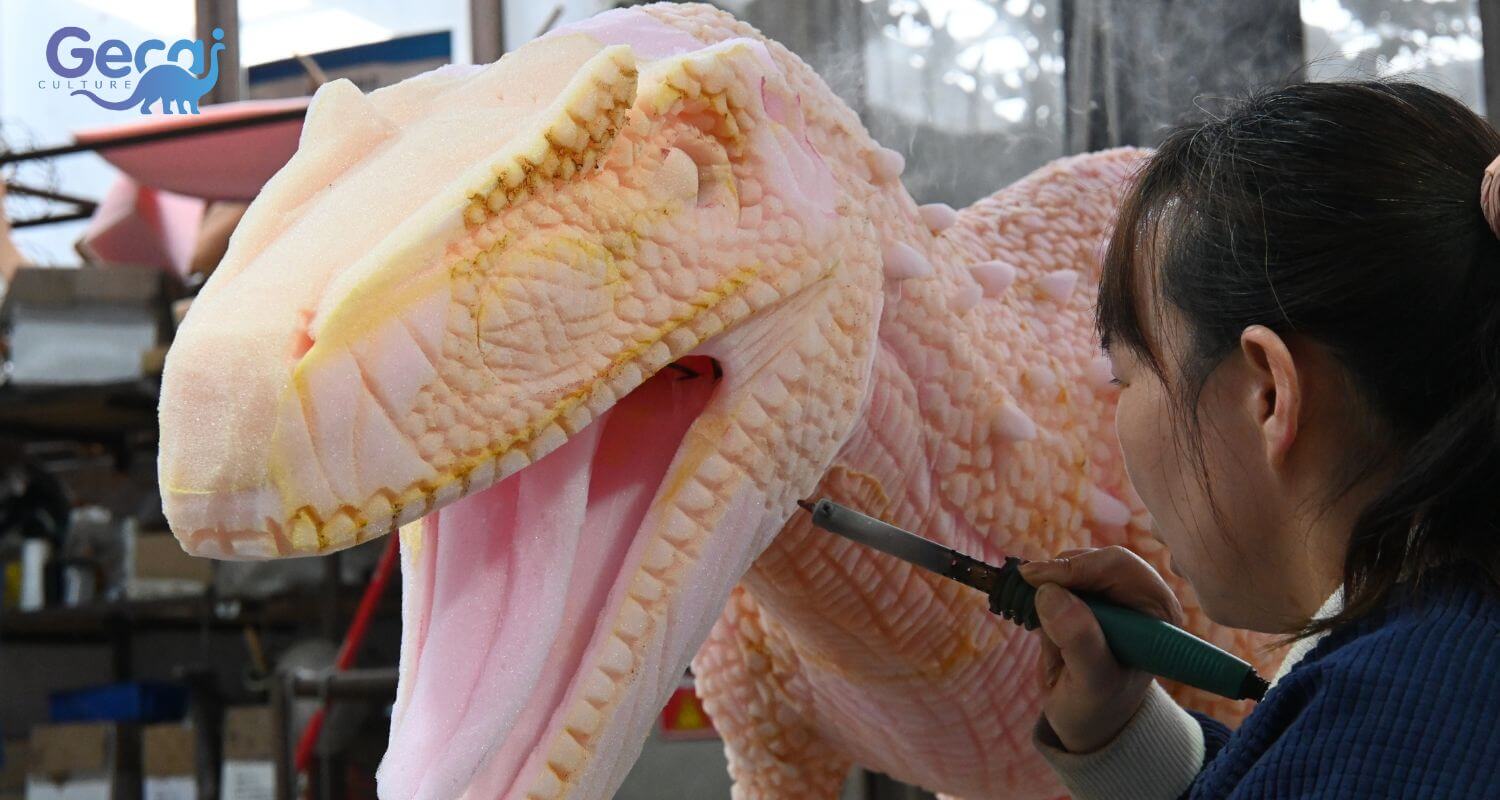 Once the body shape is finalized, artisans move on to surface detailing.
Handcrafted Textures Include:
Scales and skin grain
Wrinkles and folds
Natural irregularities
This step is critical because texture is what separates a basic model from a truly lifelike dinosaur.
4. Skin Layer Application: Flexible Outer Coating
A layer of silicone or rubber skin is applied over the sculpted foam.
Benefits of This Layer:
Flexible enough to move with internal mechanisms
Resistant to cracking and wear
Waterproof and suitable for outdoor use
This outer layer acts as a protective and dynamic skin.
5. Final Assembly: Integrating All Components
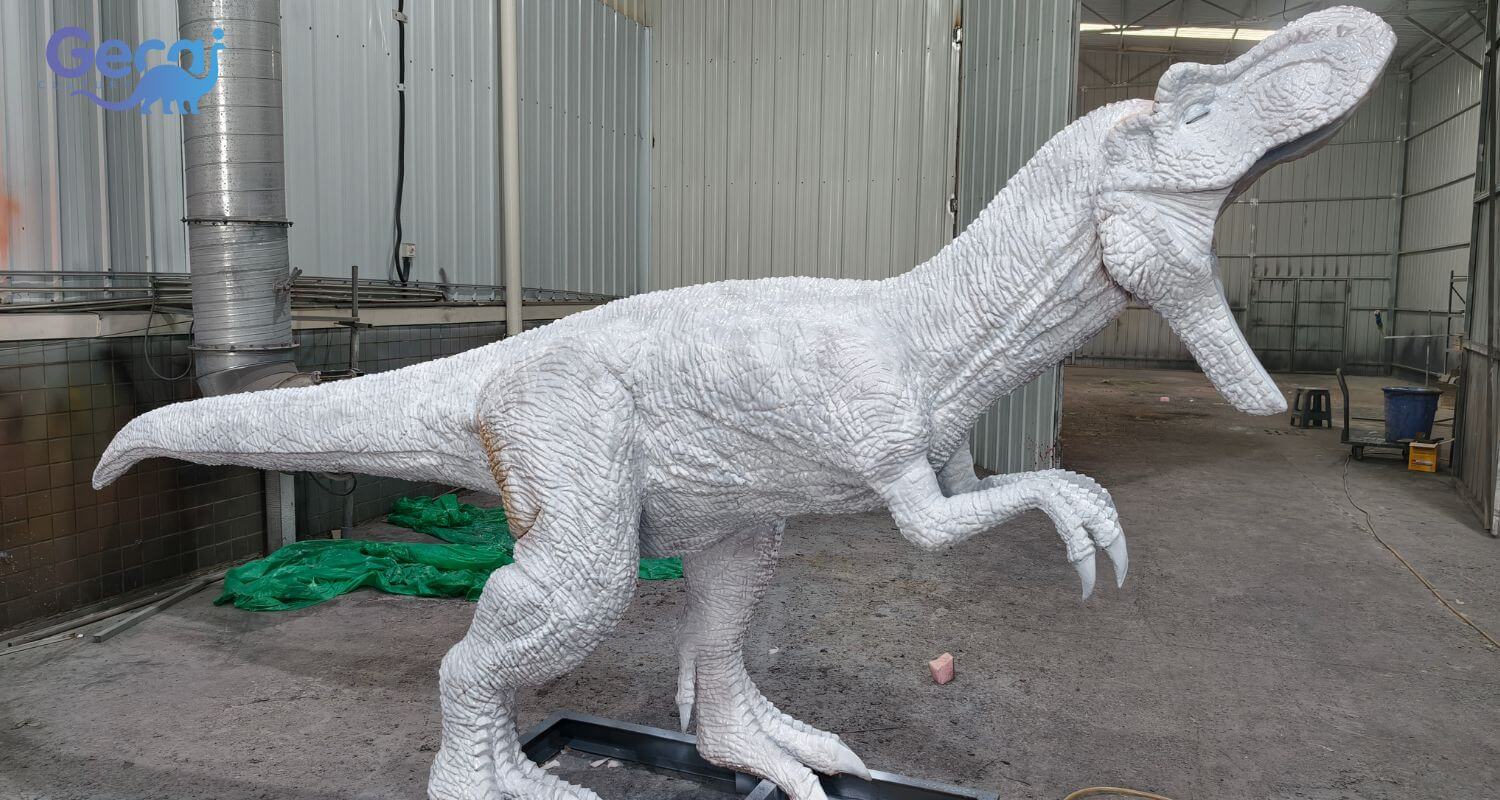 Before painting, the dinosaur is fully assembled.
Assembly Includes:
Structural components secured
Surface layers finalized
Overall form inspection
This ensures that all parts are correctly aligned and ready for the final visual stage.
6. Hand Painting: Bringing the Dinosaur to Life
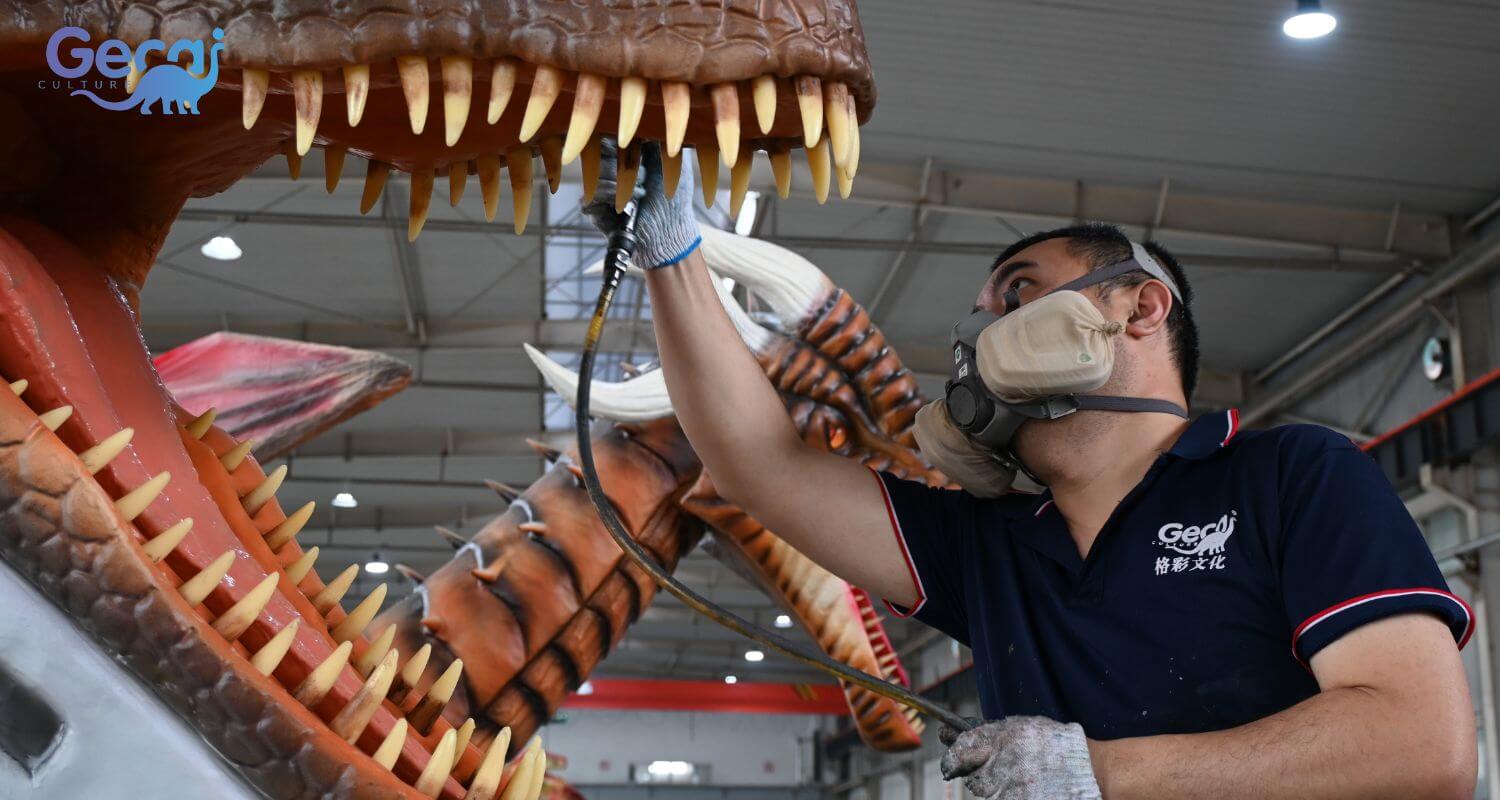 Only after full assembly does the dinosaur receive its final coloring.
Why Painting Comes Last
Painting after assembly ensures:
Seamless color across joints and connection points
Consistent texture appearance
No visible assembly marks
Painting Techniques:
Multi-layer airbrushing
Gradient shading and highlighting
Custom colors based on species or client needs
This step transforms the model from a sculpted object into a visually striking, lifelike creature.
7. Finished Product: Ready for Delivery
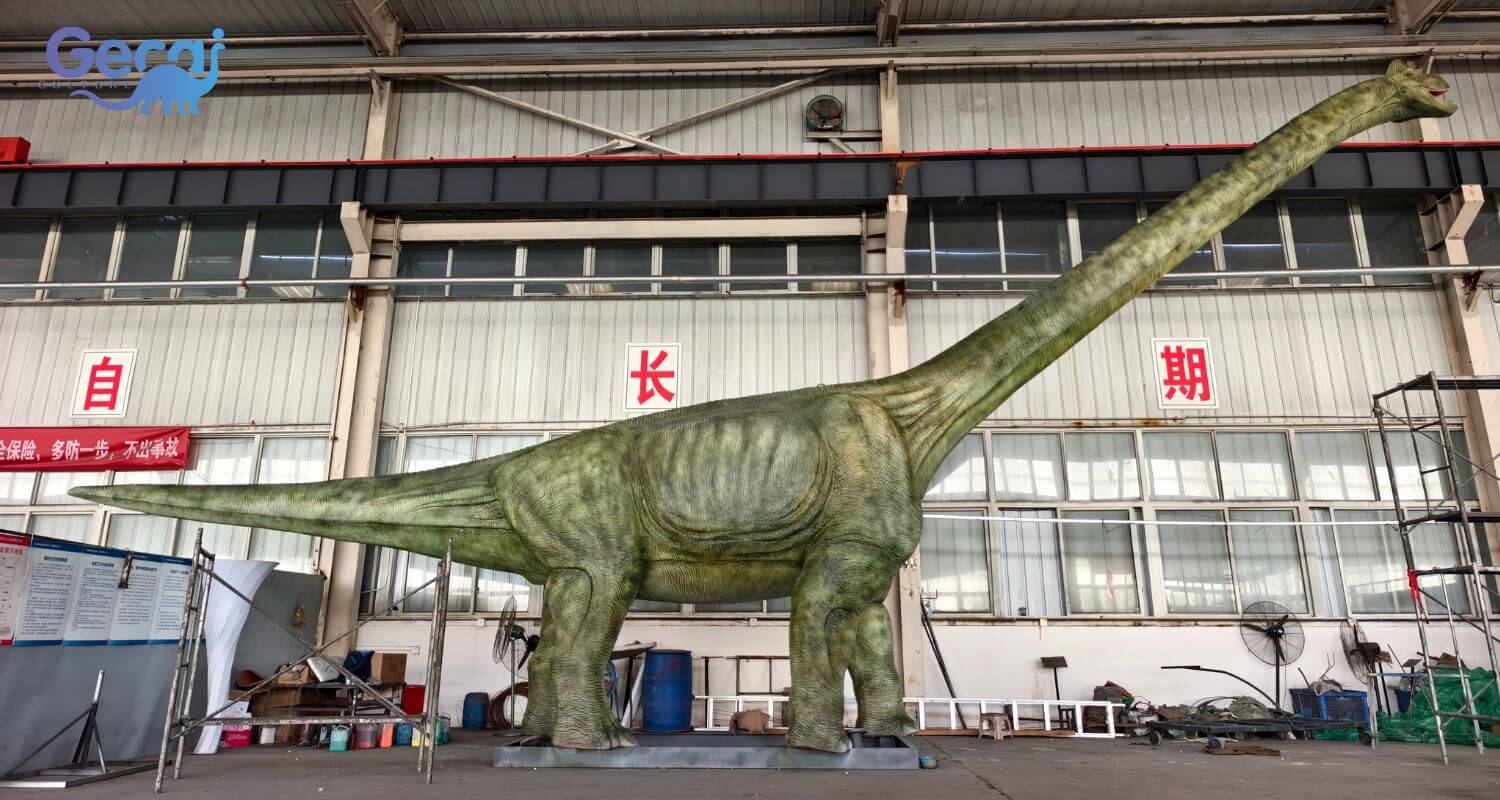 After painting, the dinosaur undergoes final inspection and is prepared for shipment.
Final Checks:
Surface quality and color consistency
Structural stability
Detail accuracy
At this stage, the dinosaur is complete and ready for installation in parks, museums, or exhibitions worldwide.
FAQs About the Manufacturing Process
 Why is painting done after assembly?
To ensure uniform color, hide seams, and achieve a more natural, continuous appearance.
How long does production take?
Usually 2–6 weeks, depending on size and customization.
Are the materials weather-resistant?
Yes, they are designed for both indoor and outdoor use.
Conclusion: A Process Built for Realism
 From steel frame construction to final painting, each step is carefully planned and executed.
By painting after assembly, manufacturers achieve:
Better visual consistency
Higher realism
Cleaner finishing
The result is not just a model, but a dinosaur that feels ready to breathe, move, and captivate any audience.
Tags: