About us
Gecai Culture stands at the forefront of bringing the past to life through our state-of-the-art Animatronic Dinosaurs, enchanting Animatronic Creatures, vibrant Chinese Festival Lanterns, and tailored Custom Products. As a professional manufacturer nestled in the heart of China, we harbor a deep-seated passion for showcasing our lifelike dinos and animals in museums, exhibitions, zoos, parks, and beyond, aiming to kindle a flame of curiosity and learning in people of all ages.
Get a free quote
Company News
What Should You Consider Before Buying an Animatronic Dinosaur?
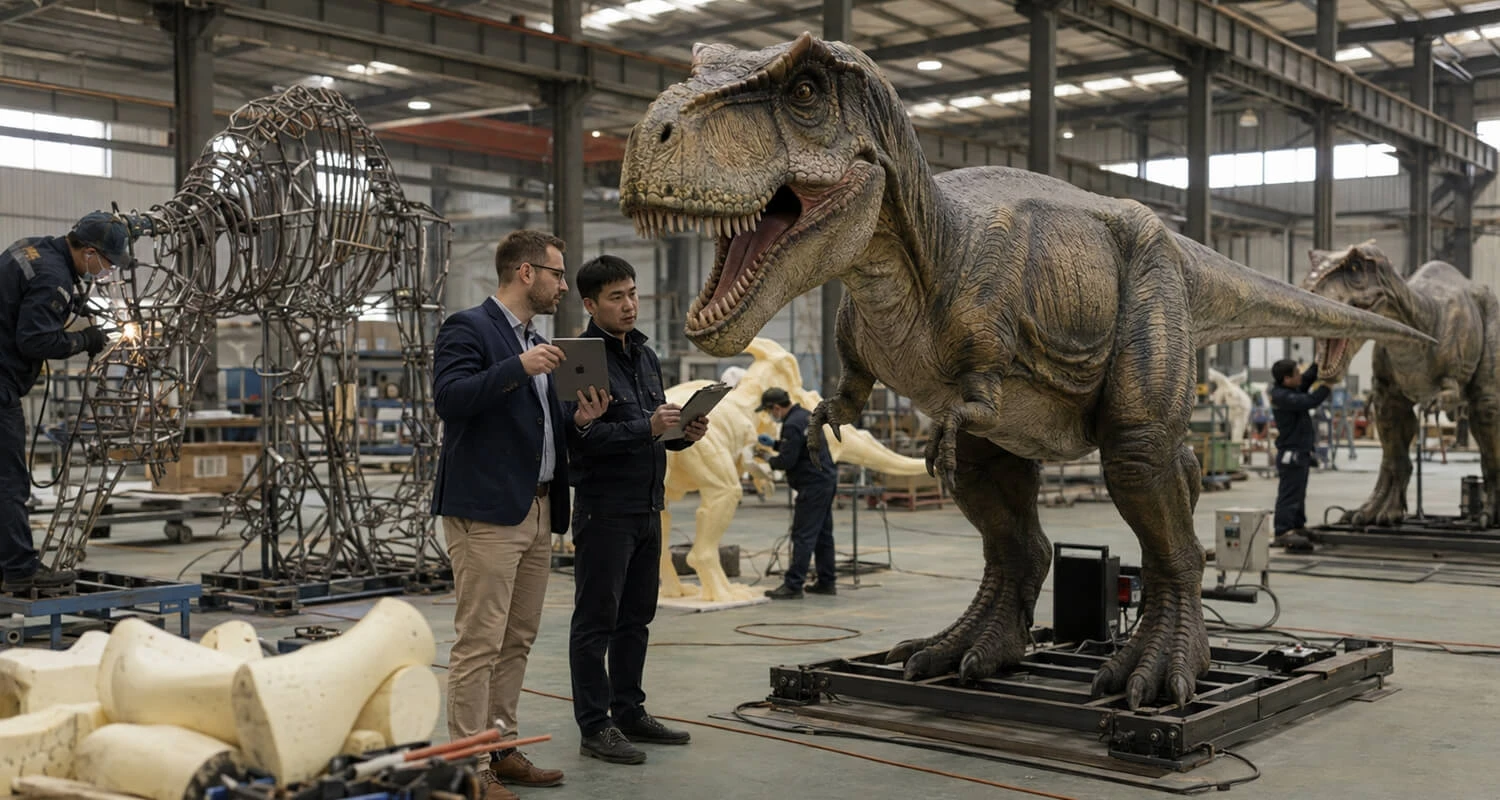
Buying an animatronic dinosaur involves more than selecting a species and asking for a price. Buyers should consider the venue, available space, operating environment, movement requirements, installation, maintenance and supplier support.
Clear project information helps the manufacturer recommend a suitable design and prepare a more accurate quotation. The following checklist covers the main decisions buyers should make before placing an order.
1. Define the Project Application
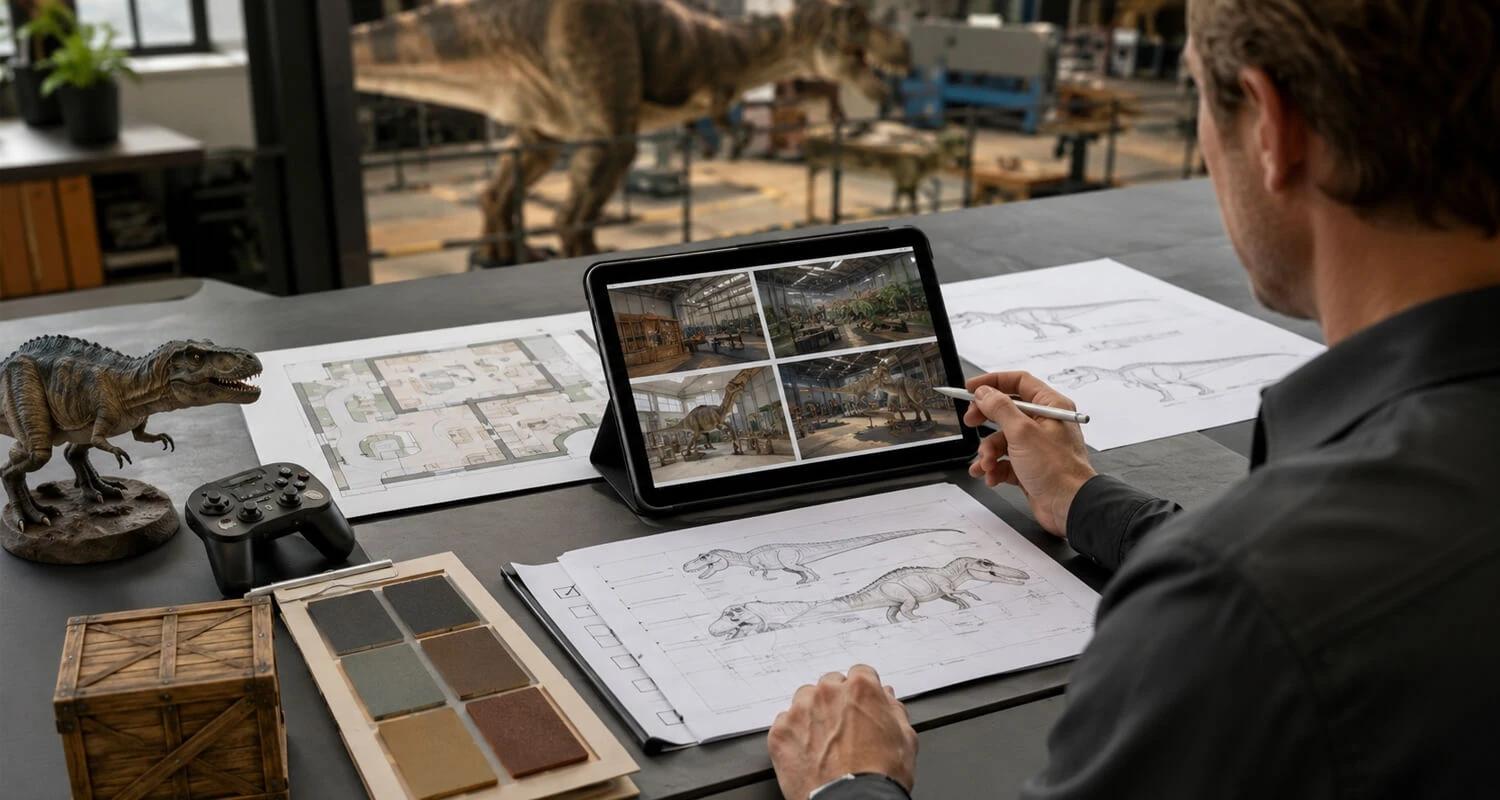
Start by explaining how and where the animatronic dinosaur will be used. A permanent outdoor theme park, an indoor museum and a traveling exhibition have different technical requirements.
Common applications include:
Theme parks and dinosaur parks
Museums and science centers
Zoos and botanical gardens
Shopping malls
Resorts and tourist attractions
Temporary exhibitions and events
Also explain whether the dinosaur will be a central attraction, part of a larger scene or an interactive exhibit. This helps determine the appropriate size, posture, movements and control method.
2. Check the Available Space
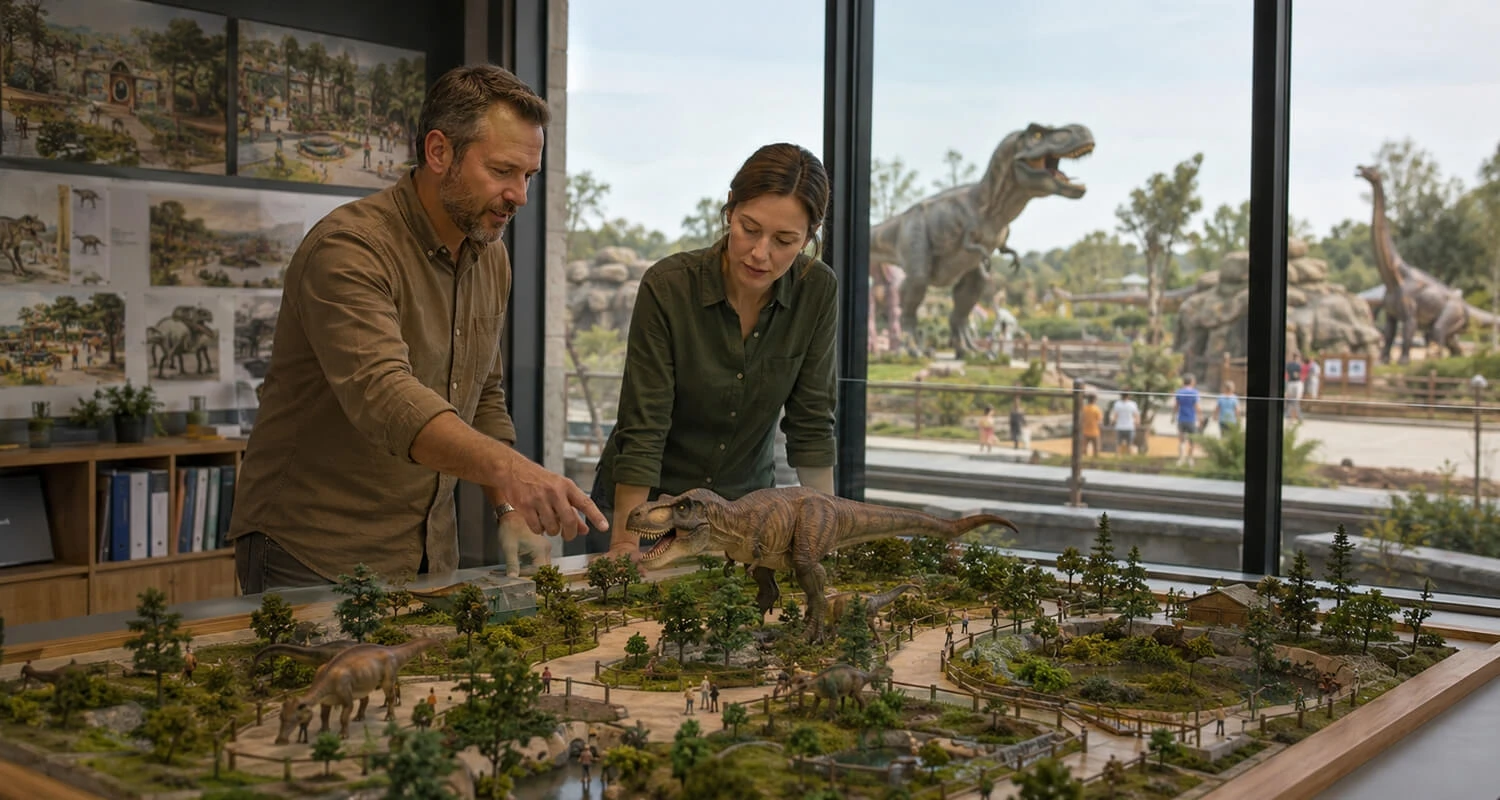
The selected dinosaur must fit the venue during transportation, installation and operation. Buyers should consider more than the model’s total length.
Measure:
Installation area
Ceiling height for indoor venues
Entrance, doorway and corridor dimensions
Visitor distance
Movement clearance
Access for lifting and installation equipment
Space required for future maintenance
A large dinosaur may create strong visual impact, but it can overwhelm a small venue or become difficult to transport. Smaller models or dinosaur groups may provide a better display in limited spaces.
Raised heads, open mouths, moving tails and extended wings also increase the required clearance. Share venue photographs and measurements with the manufacturer before confirming the design.
3. Select the Species, Size and Posture
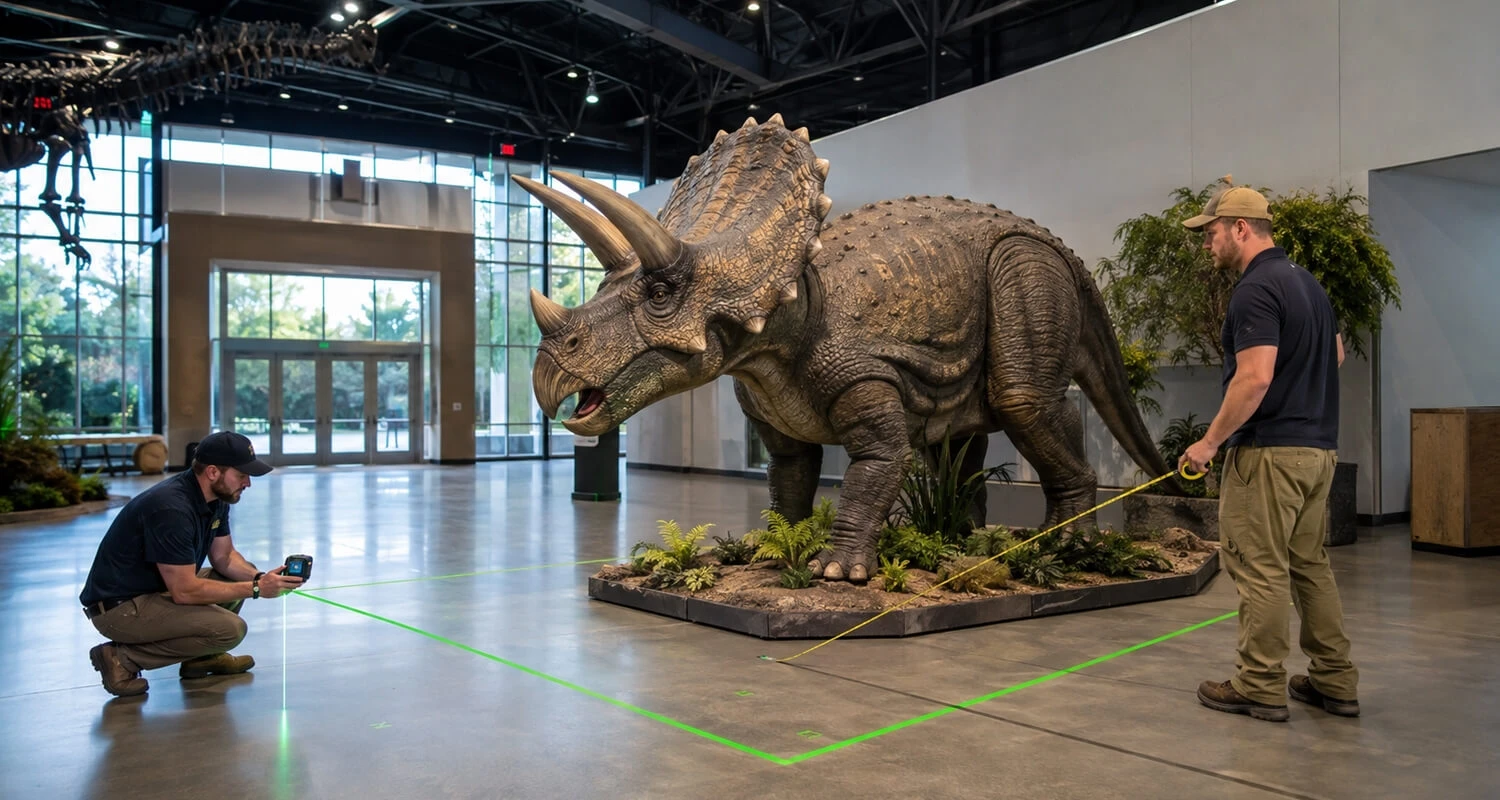
Choose a species that supports the theme and audience of the project. Tyrannosaurus rex and Spinosaurus often work as major visual attractions, while Triceratops, Stegosaurus and baby dinosaurs can help create varied family or educational scenes.
The model’s listed size should be clearly defined. For example, “six metres” may refer to total length rather than height. Ask the supplier to provide the length, width, height, base dimensions and approximate movement range.
Posture also affects visibility, stability, packing and installation. A raised head may improve long-distance visibility, while a lower posture may suit indoor displays and closer visitor interaction.
4. Decide Which Movements Are Necessary
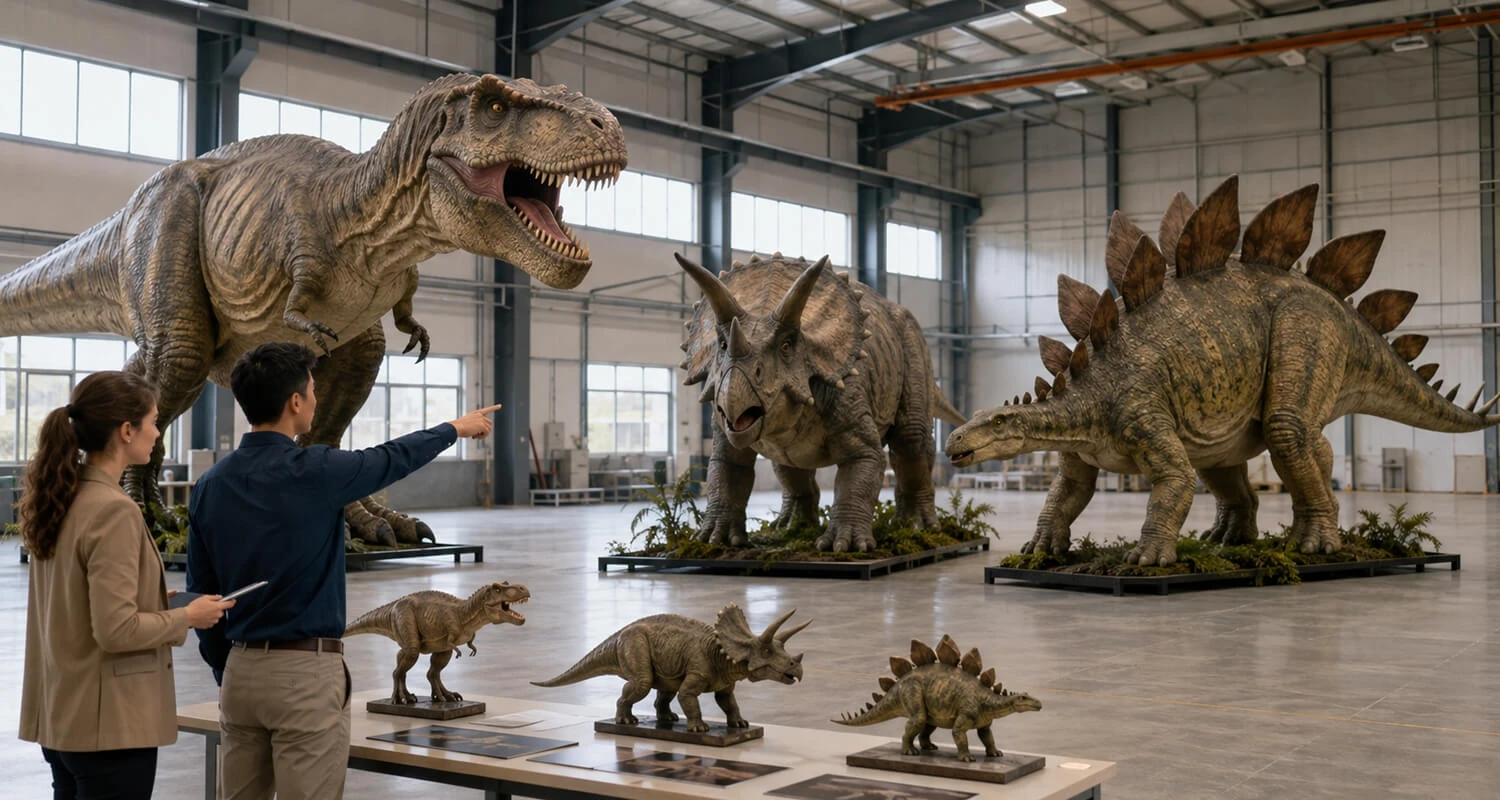
More movements do not automatically create a better dinosaur. Select movements that visitors can easily see and that support the intended scene.
Typical options include:
Head turning or lifting
Mouth opening and closing
Eye blinking
Neck movement
Body breathing
Forelimb movement
Tail movement
Synchronized sound
Standard motor systems are suitable for repeatable preset actions. Servo systems can provide smoother, more precise and coordinated movement when the design requires it, but they may also increase cost and technical complexity.
Ask the manufacturer to confirm the movement list, sequence, operating cycle and control method in writing.
5. Confirm Indoor or Outdoor Use
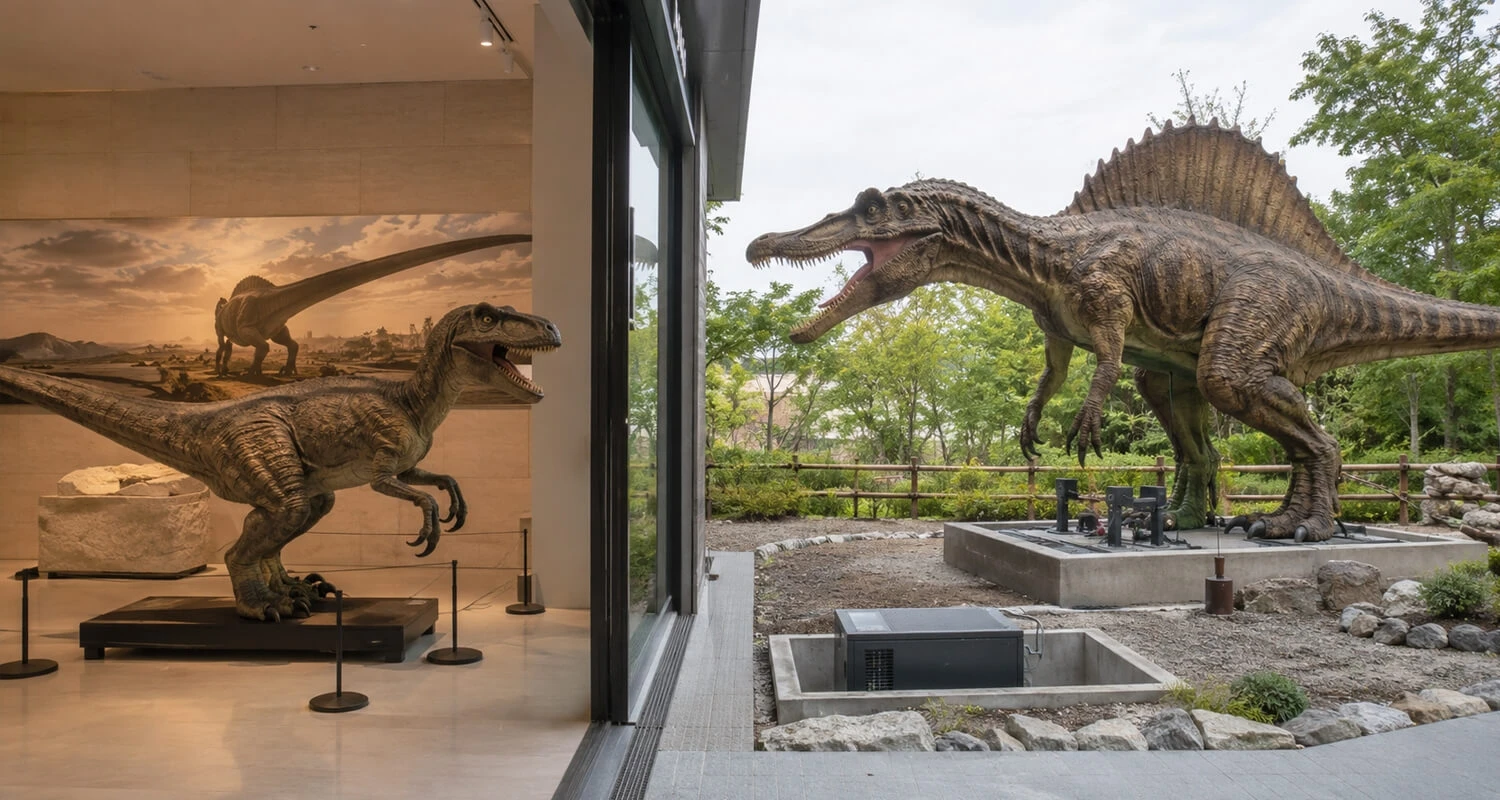
The installation environment affects the surface treatment, steel structure, electrical protection and fixing method.
Outdoor-ready animatronic dinosaurs can use weather-resistant materials and protected electrical systems. However, outdoor-ready does not mean fully waterproof or suitable for operation in every weather condition.
For an outdoor project, provide information about:
Rainfall and humidity
Temperature range
Sun exposure
Strong winds
Coastal or corrosive conditions
Ground drainage
Foundation conditions
Heavy rain, flooding, strong wind or water entering electrical equipment may require the dinosaur to stop operating. More details are available in this outdoor animatronic dinosaur guide.
6. Review Safety and Daily Operation
Before purchasing, ask how visitors will interact with the model and who will operate it.
The installation plan should include a stable base, suitable fixing points, protected cables and adequate visitor clearance. Moving areas should not enter public walkways or create accessible pinch points.
Buyers should also confirm:
Power supply and voltage
Plug and cable requirements
Control-box location
Emergency stop method
Sensor or timer options
Recommended daily operating cycle
Pre-operation inspection requirements
If the dinosaur includes riding, touch interaction or other visitor-operated functions, request specific operating and safety instructions for that product.
7. Plan Transportation and Installation
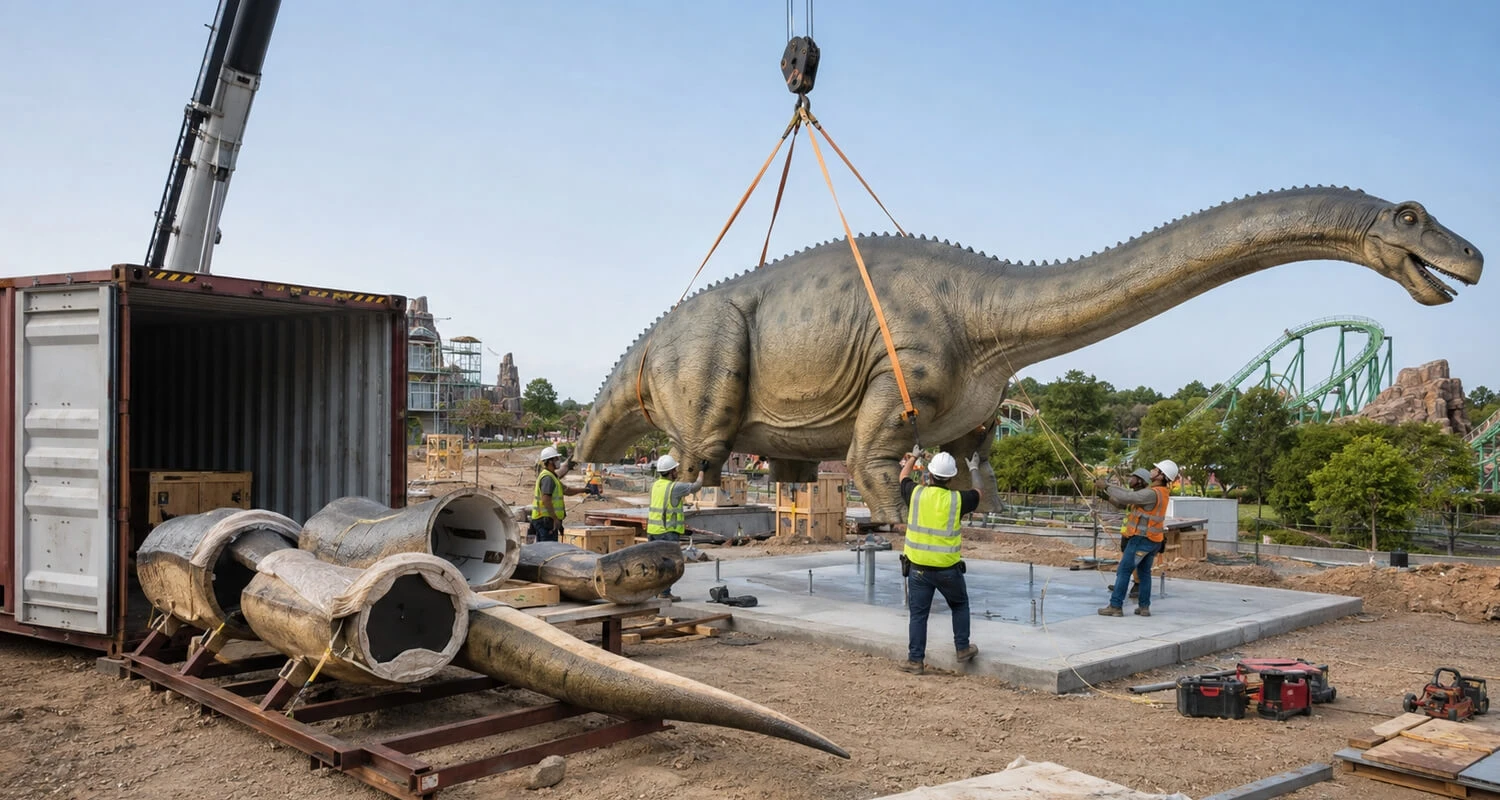
Large animatronic dinosaurs may need to be divided into sections for packing and shipping. Buyers should understand how the product will arrive and what will be required at the venue.
Confirm:
Packing method
Number and dimensions of packages
Shipping destination
Unloading requirements
Required lifting equipment
Assembly procedure
Foundation preparation
Installation responsibilities
Testing after installation
The lowest product quotation may not represent the lowest total project cost. Freight, customs clearance, unloading, foundations, equipment rental and installation labour should all be considered.
8. Understand Maintenance and After-Sales Support
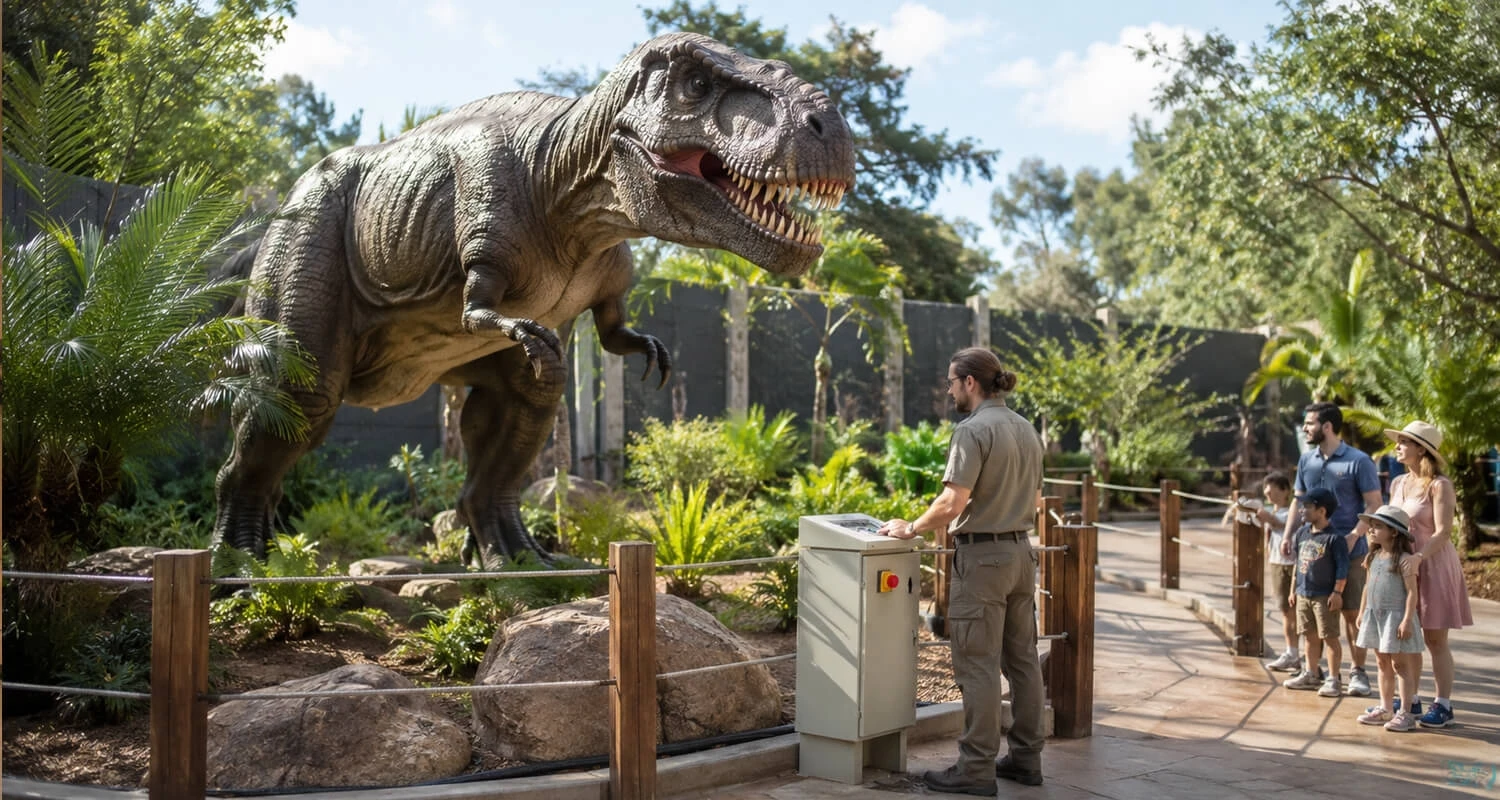
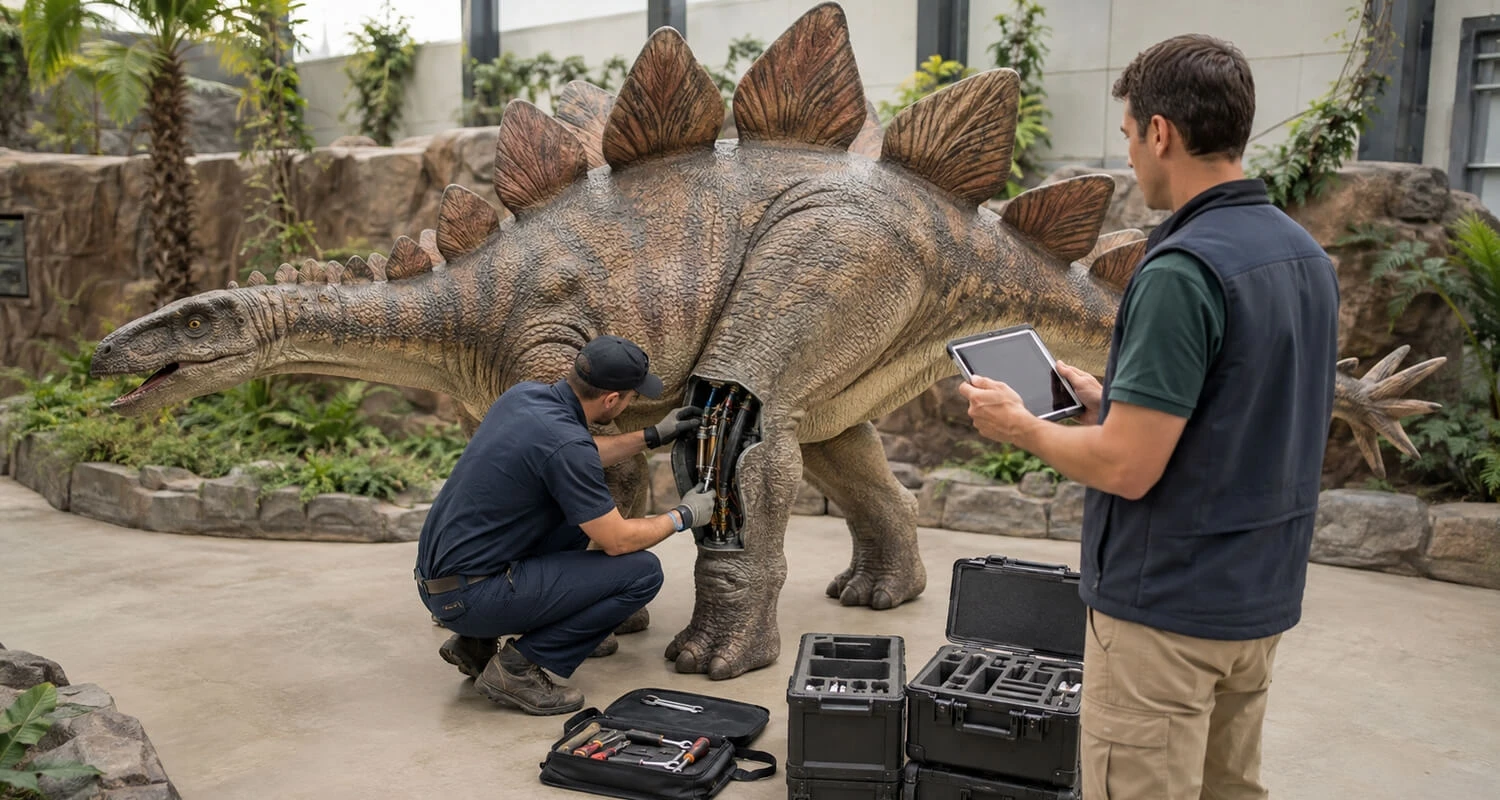
Animatronic dinosaurs contain moving, electrical and surface components that require inspection and maintenance.
Ask the supplier what maintenance can be handled by venue staff and what work requires a trained technician. Confirm whether the manufacturer provides manuals, wiring information, operating guidance, remote technical assistance and replacement parts.
Warranty terms should clearly explain the coverage period, included components, exclusions and claim process. Buyers should also ask how replacement parts are identified and shipped after the warranty ends.
For routine inspection requirements, see the animatronic dinosaur maintenance guide.
9. Evaluate the Manufacturer
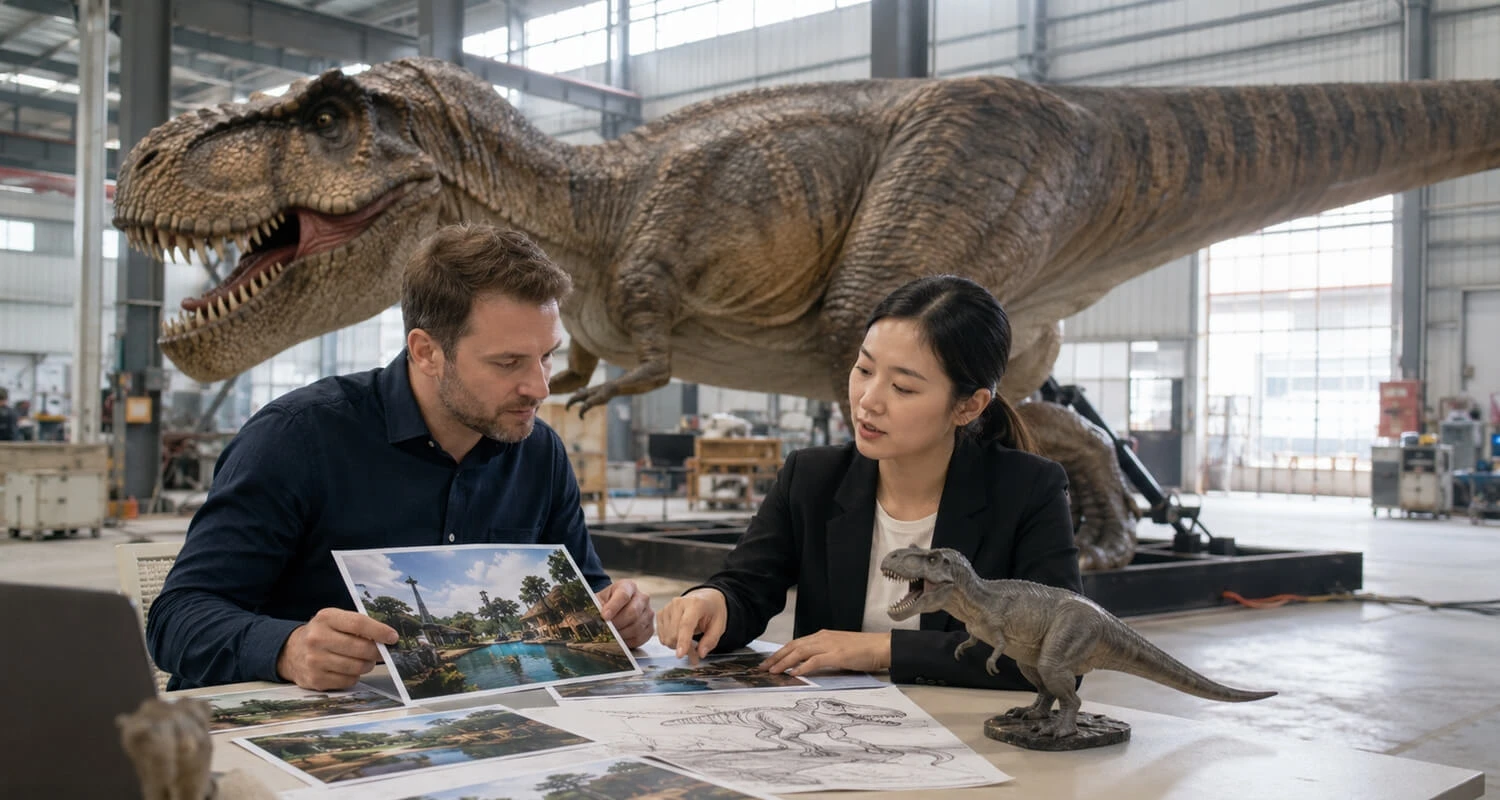
Do not compare suppliers only through product photographs. Review whether the manufacturer can explain its materials, movement systems, production process and quality inspections clearly.
Useful checks include:
Factory photographs or video
Relevant project examples
Design and engineering capabilities
Production-stage inspections
Movement testing before shipment
Packing experience
Installation support
Maintenance documentation
Clear communication about limitations
A reliable supplier should ask detailed questions about the venue and application instead of immediately recommending the largest or most complex model.
10. Compare Quotations Carefully
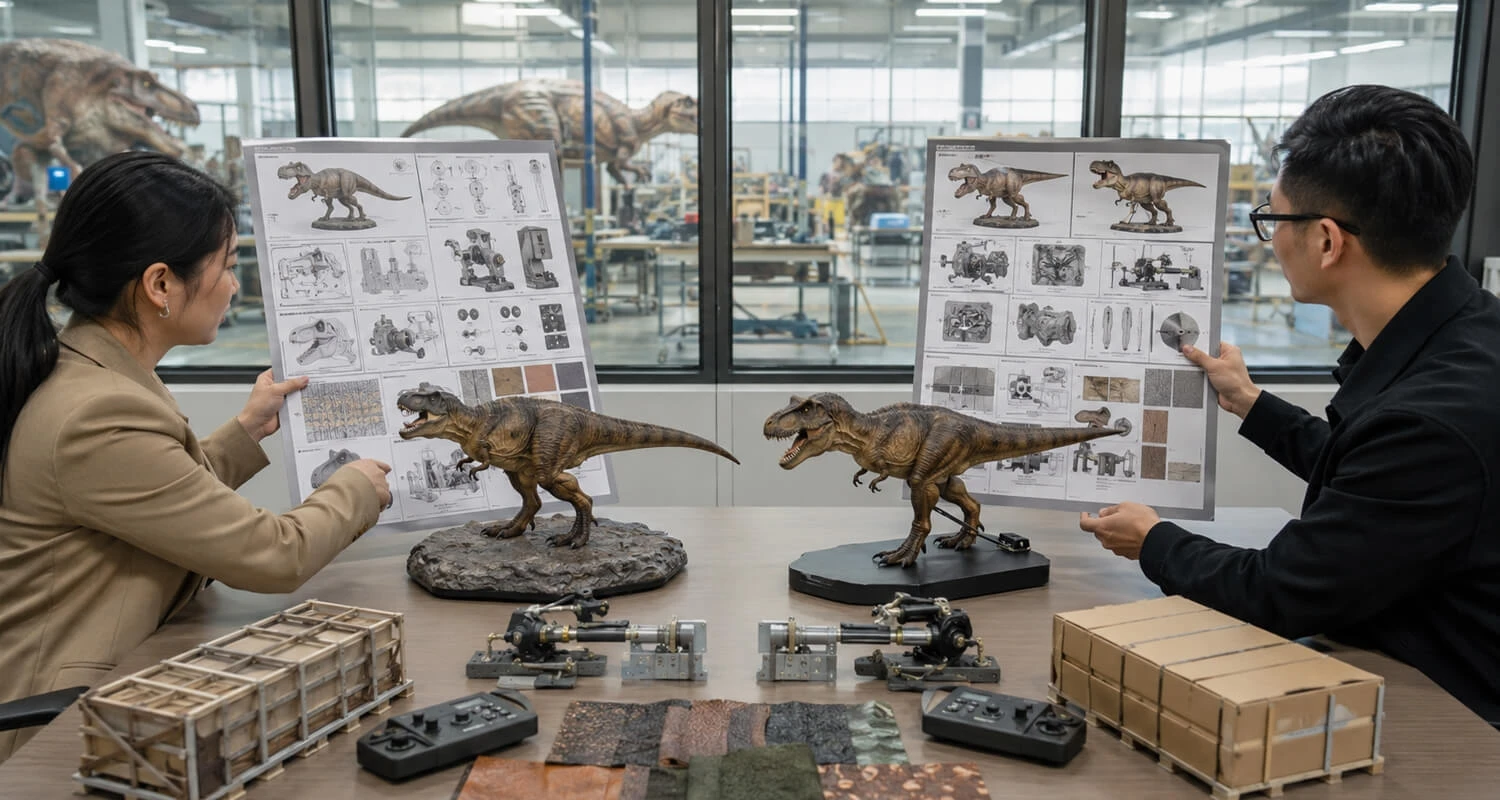
Two quotations may describe visually similar dinosaurs but include different structures, movements, materials, controllers, packing and services.
A useful quotation should specify:
Dinosaur species and dimensions
Posture and appearance
Movement list
Motor or control system
Sound and additional effects
Indoor or outdoor configuration
Base and fixing design
Packing method
Production time
Installation scope
Warranty and after-sales support
Included and excluded costs
Request clarification when an item is described only as "standard" or "high quality." Detailed specifications make quotations easier to compare and reduce misunderstandings during production.
Frequently Asked Questions
What information should I send before requesting a quotation?
Provide the product type, preferred species, size, quantity, movements, indoor or outdoor use, destination, venue photographs and required delivery date.
Should I choose the largest dinosaur my budget allows?
Not necessarily. The right size depends on viewing distance, available space, transport access, installation conditions and the dinosaur’s role within the venue.
Can every design be customized?
Size, colour, posture, movement, sound and control methods can usually be customized, subject to technical feasibility, safety and budget.
Conclusion
Before buying an animatronic dinosaur, define the application, measure the venue and confirm the required size, movements, environment, installation and maintenance arrangements. Compare suppliers and quotations using complete technical specifications rather than price alone.
Send Gecai Culture your venue information, preferred dinosaur, size, functions, installation environment, destination and timeline to receive a project-specific recommendation and quotation.
Tags: