About us
Gecai Culture stands at the forefront of bringing the past to life through our state-of-the-art Animatronic Dinosaurs, enchanting Animatronic Creatures, vibrant Chinese Festival Lanterns, and tailored Custom Products. As a professional manufacturer nestled in the heart of China, we harbor a deep-seated passion for showcasing our lifelike dinos and animals in museums, exhibitions, zoos, parks, and beyond, aiming to kindle a flame of curiosity and learning in people of all ages.
Get a free quote
Company News
Custom Animatronic Chinese Dragon: From Design to Product
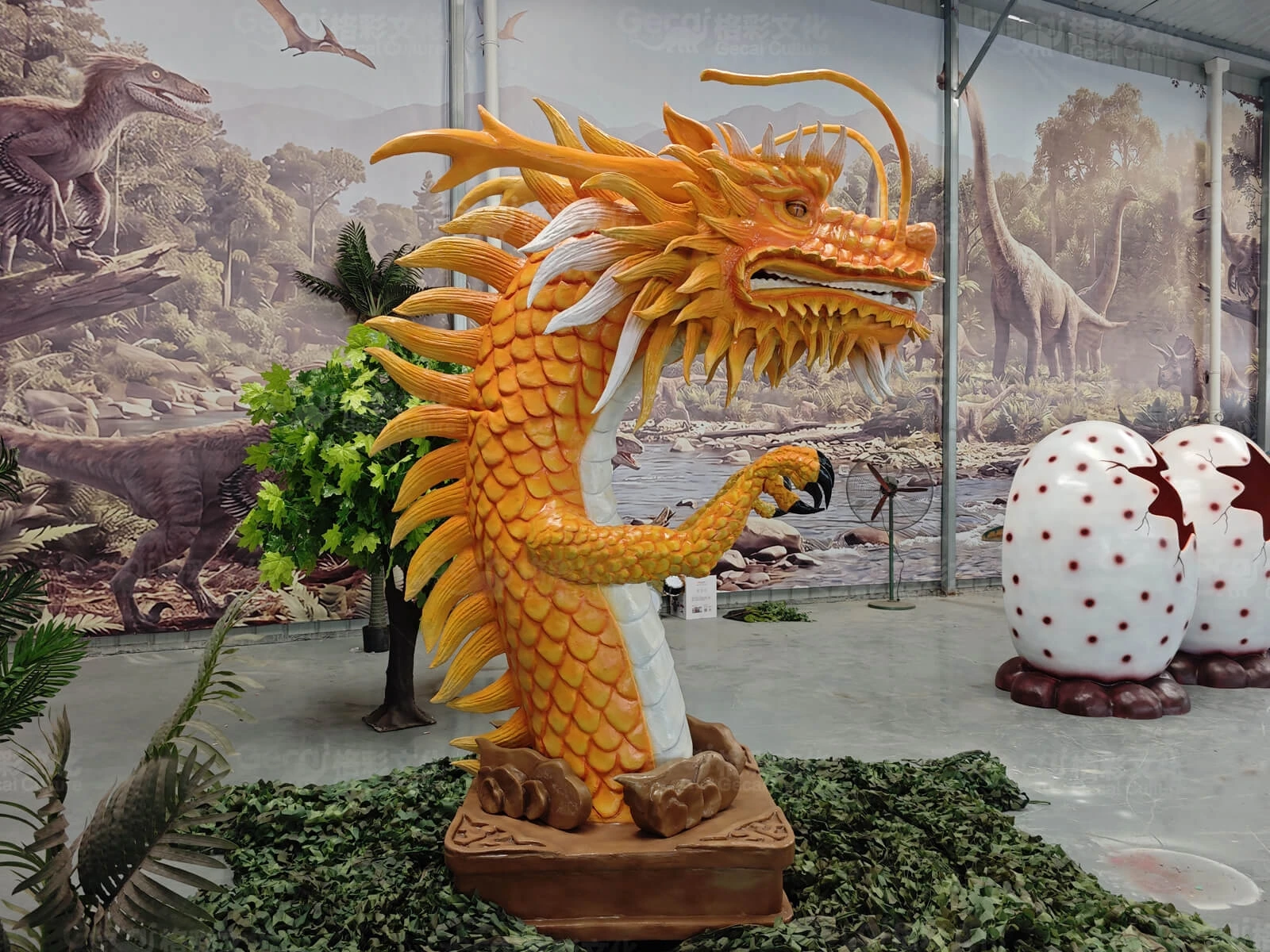
A custom animatronic Chinese dragon requires more than an attractive appearance. Its proportions, internal structure, lighting, surface details and special effects must be planned as one complete system.
For this project, we created an orange-gold Chinese dragon display with an upright posture, illuminated horns and back spines, detailed scales, an expressive head and a themed display base. The result combines traditional Chinese dragon elements with modern animatronic production techniques.
Understanding the Project Requirements
Before starting the design, we first confirm how and where the dragon will be used. Important project information includes:
Required product height and installation space
Indoor or outdoor application
Preferred dragon style and colors
Viewing distance and visitor flow
Required movements and special effects
Local voltage and power supply
Transportation and installation conditions
Because this model is designed as a visual centerpiece, it needs to attract attention from a distance while still providing enough detail for visitors viewing it up close.
Developing the Chinese Dragon Concept
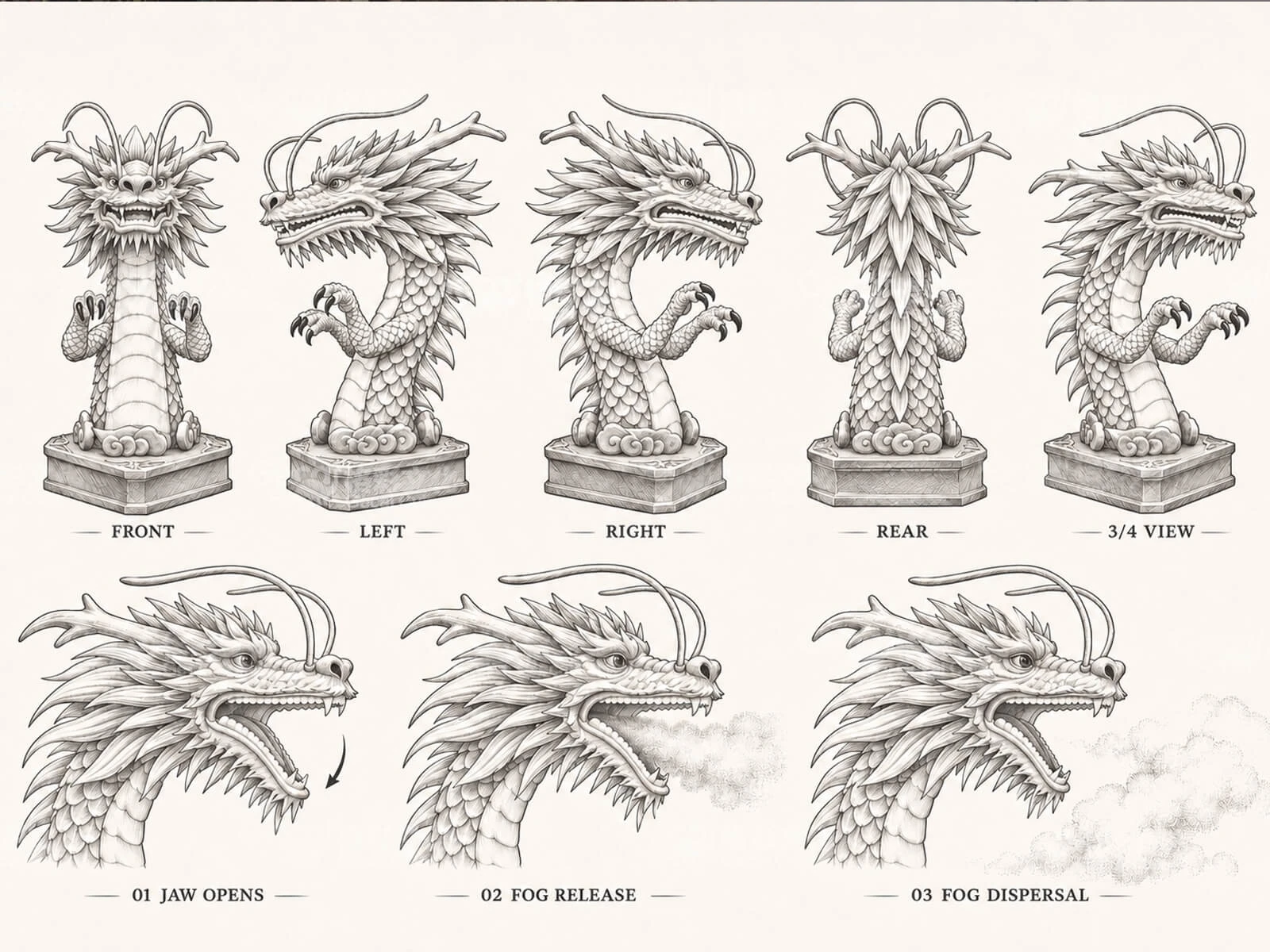
The design stage establishes the dragon’s overall character.
For this product, we selected an upright pose with a long curved neck, an open mouth and raised front claws. This posture creates a strong vertical composition without requiring the floor space of a complete horizontal dragon.
The head was designed as the main visual focus. Key elements include:
Long illuminated horns and whiskers
Layered facial scales
Raised eyebrows and a strong snout
Red eyes
Sharp teeth
Decorative beard and mane
Illuminated spines along the neck
Orange, gold and white color combinations
The display base was also included in the original concept so that the finished dragon could be installed as a complete attraction rather than as a separate model.
Creating and Confirming the 3D Model
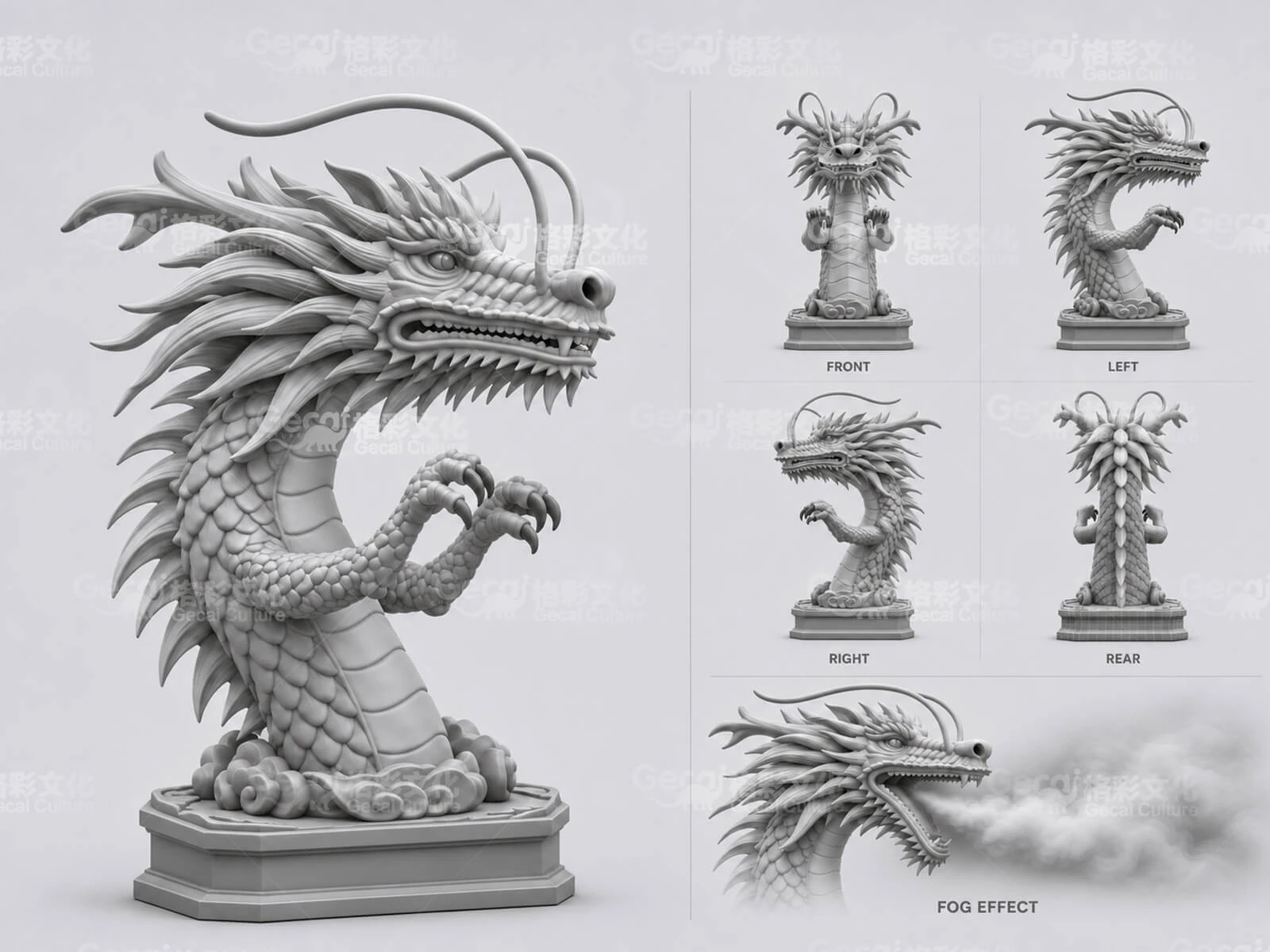
After the concept is approved, the next step is to develop a 3D model.
The 3D design helps the customer and production team review the dragon from different angles. At this stage, we adjust the proportions of the head, neck, claws, horns and base.
It also allows the engineering team to plan:
The internal steel structure
Lighting positions
Cable routes
Special-effect components
Maintenance access
Connection points
Transportable sections
For example, the long horns and whiskers must look elegant but also remain practical for production, packaging and installation. The 3D model helps us identify these issues before physical fabrication begins.
Designing the Internal Structure
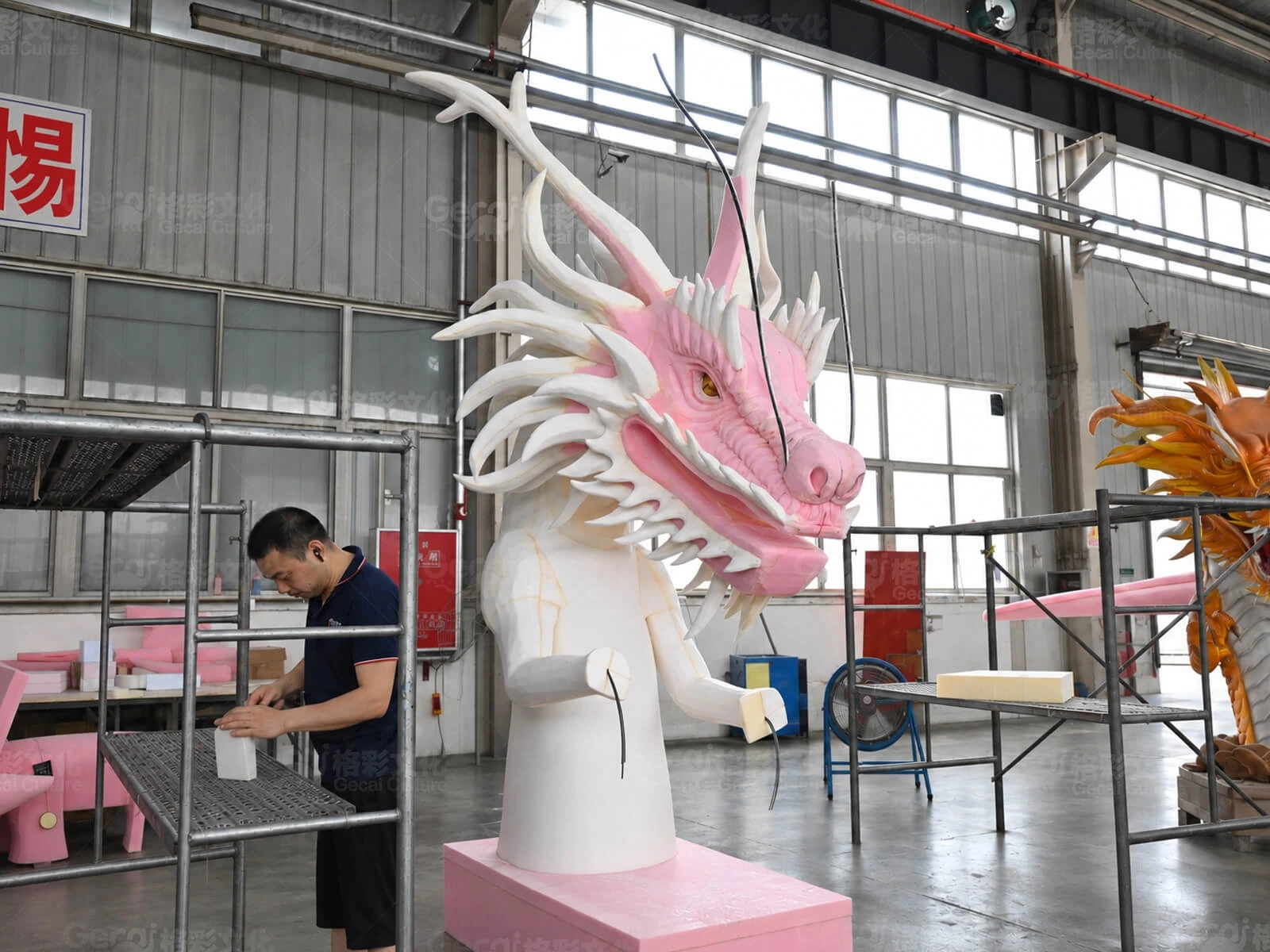
The internal steel frame supports the dragon’s weight and keeps its posture stable.
Our engineers develop the structure according to the approved dimensions and pose. The frame must provide enough support for the large head, extended horns, front claws and illuminated back decorations.
The base is designed together with the body instead of being added after production. This helps distribute the weight and provides space for electrical components and effect equipment.
Depending on the project requirements, the internal system can also accommodate movements such as:
Head turning
Mouth opening and closing
Claw movement
Neck movement
Movement selection should be confirmed during the design stage because different actions require different motors, connection points and internal space.
Sculpting the Dragon’s Shape
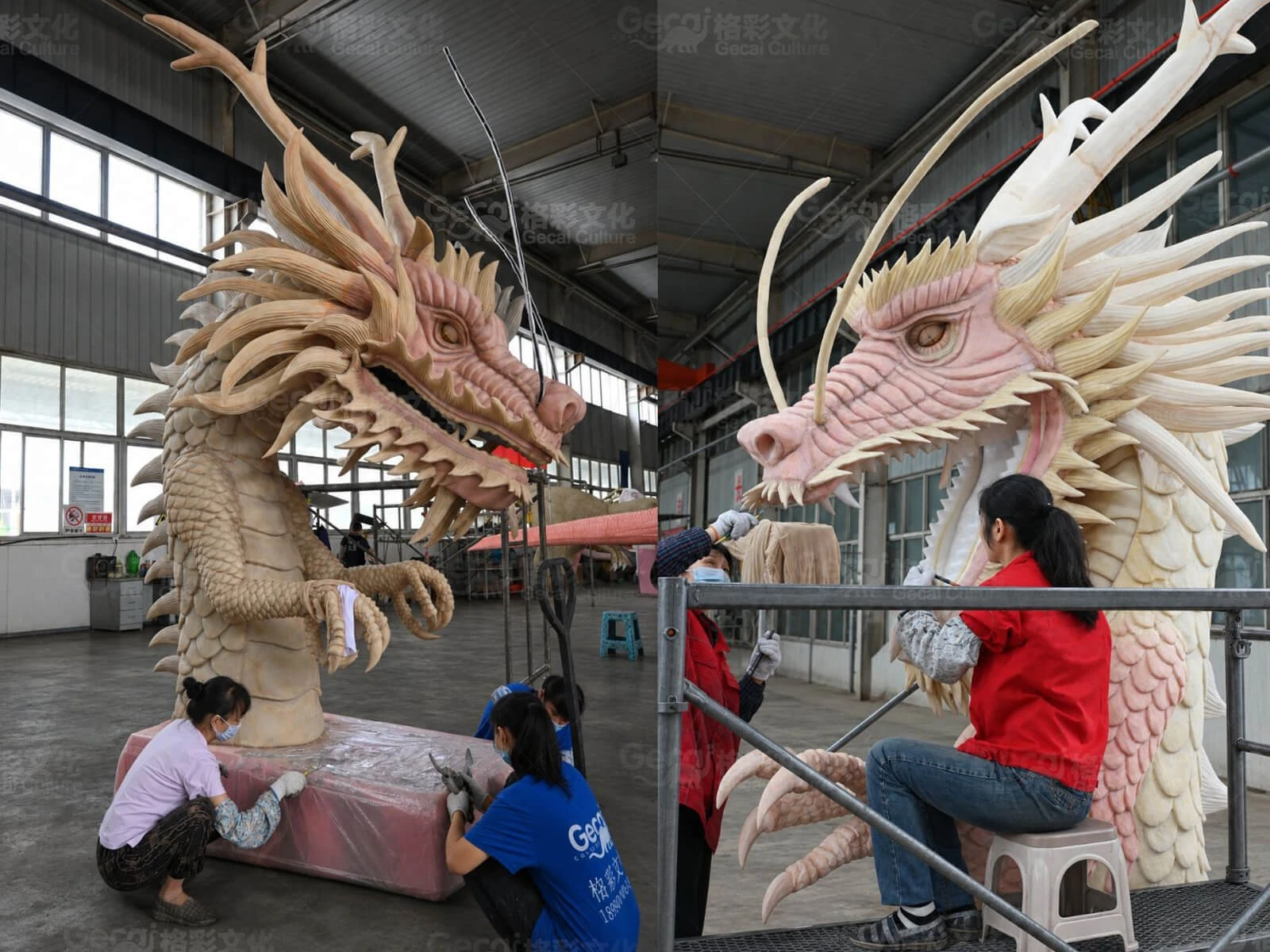
Once the steel structure is complete, artists begin building the dragon’s external form.
The basic volume of the neck, head and limbs is created first. The artists then refine the face, jaw, eyes, nose, claws and other recognizable features.
Scales are arranged according to the shape of the body. Larger scales are used on the neck and face, while smaller details are added around the eyes, mouth and joints. The mane, beard and facial decorations are sculpted in layers to give the model more depth.
This stage requires continuous comparison with the approved design. Even small changes to the eyes, mouth or horns can significantly affect the dragon’s expression.
Adding Surface Texture and Color
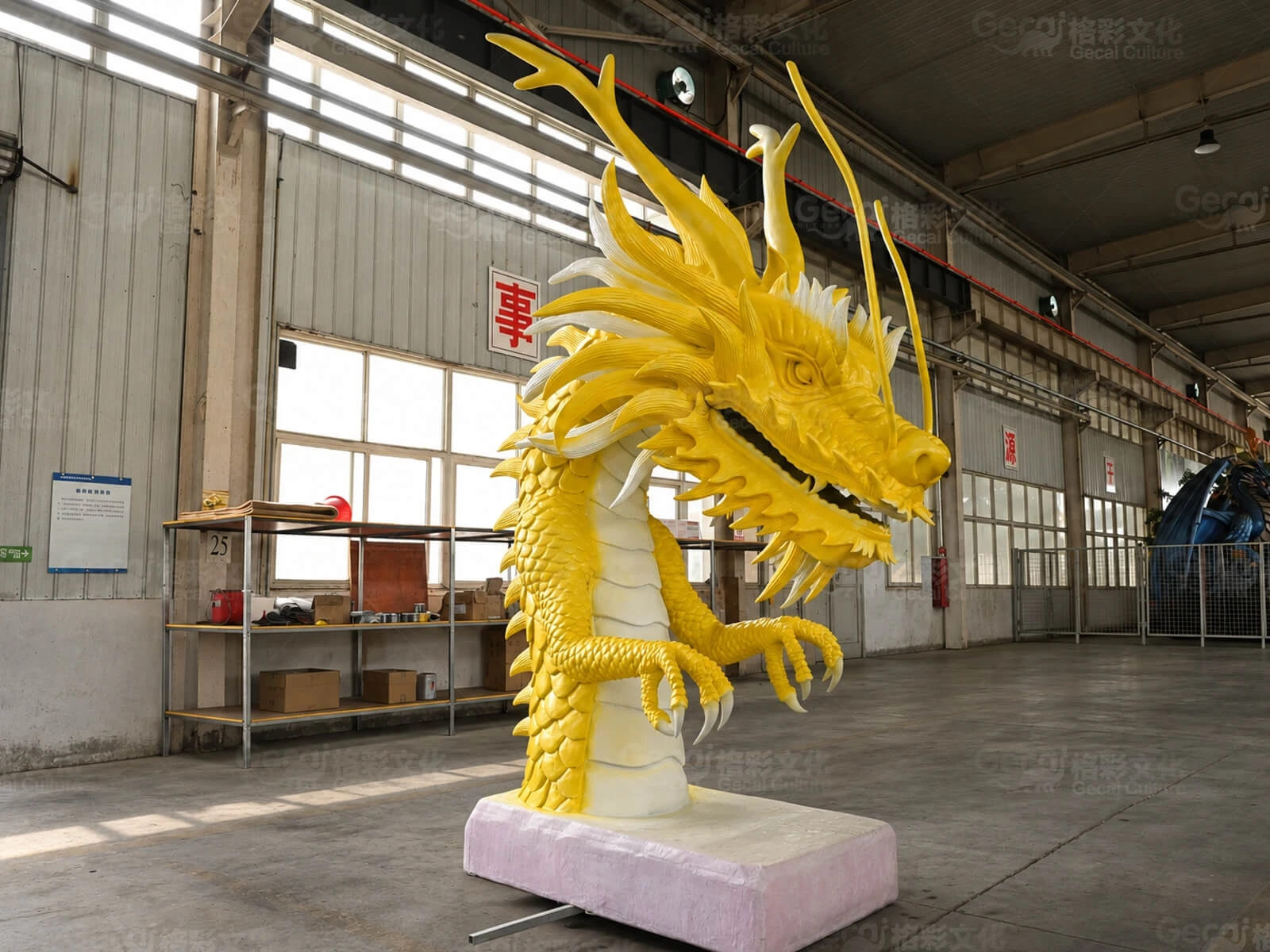
Color is essential to the final appearance of the dragon.
The main body of this model uses an orange-gold palette, while the belly is finished in a lighter white and cream color. Different shades of orange, yellow and brown are layered across the scales to prevent the surface from appearing flat.
Additional details are applied to:
Eyes
Teeth and gums
Horns
Claws
Mane and beard
Facial scales
Neck spines
Highlights and shadows help define the individual scales and make the dragon more visible under both natural and artificial lighting.
Installing the Lighting and Mist Effects
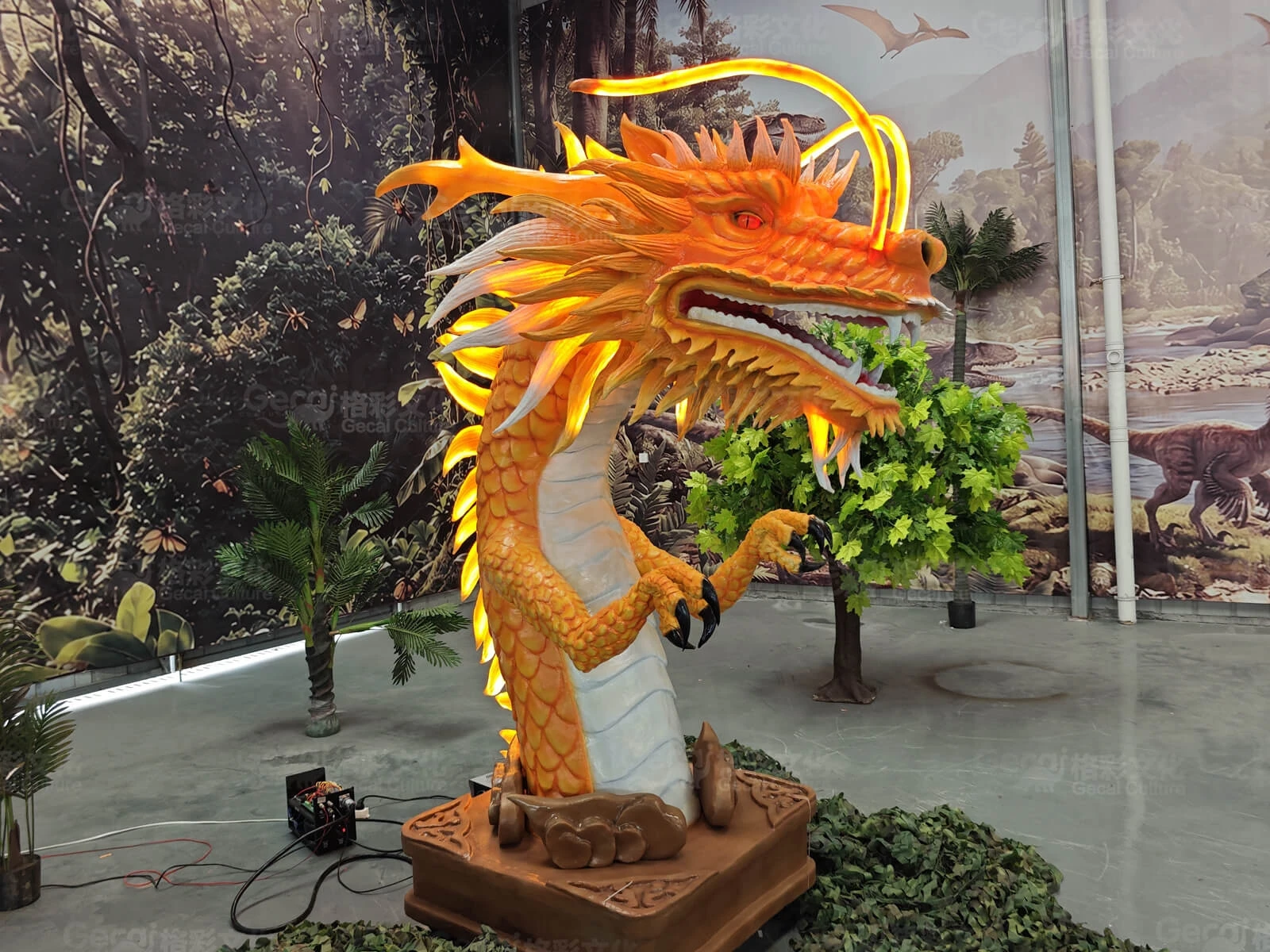
Illuminated elements are one of the most distinctive features of this custom dragon.
Translucent components and internal lighting are used in the long horns, whiskers and back spines. The lighting system must be installed carefully so that the glow appears even, without exposing cables or creating strong visible hotspots.
A mist outlet can also be integrated into the mouth to create a dragon-breath effect. When the dragon is displayed in a darker environment, the combination of glowing details and mist can produce a stronger visual impact.
The electrical system, lighting modules and effect equipment are arranged so that they remain accessible for inspection and maintenance.
Final Assembly and Testing
After the surface work, lighting and effects are completed, the dragon enters the testing stage.
The production team checks:
| Test Item | Main Purpose |
|---|---|
| Structural stability | Confirm the body and base remain secure |
| Lighting test | Check brightness and color consistency |
| Mist-effect test | Confirm the effect operates correctly |
| Movement test | Check motion range and smoothness |
| Electrical test | Inspect cables, connections and controls |
| Surface inspection | Find paint damage or unfinished details |
| Continuous operation | Identify overheating or repeated faults |
If the dragon includes movements, each action is tested repeatedly. The team also checks whether moving parts touch the external surface or interfere with lighting and effect components.
Any problems found during testing are corrected before packing.
Completing the Finished Dragon
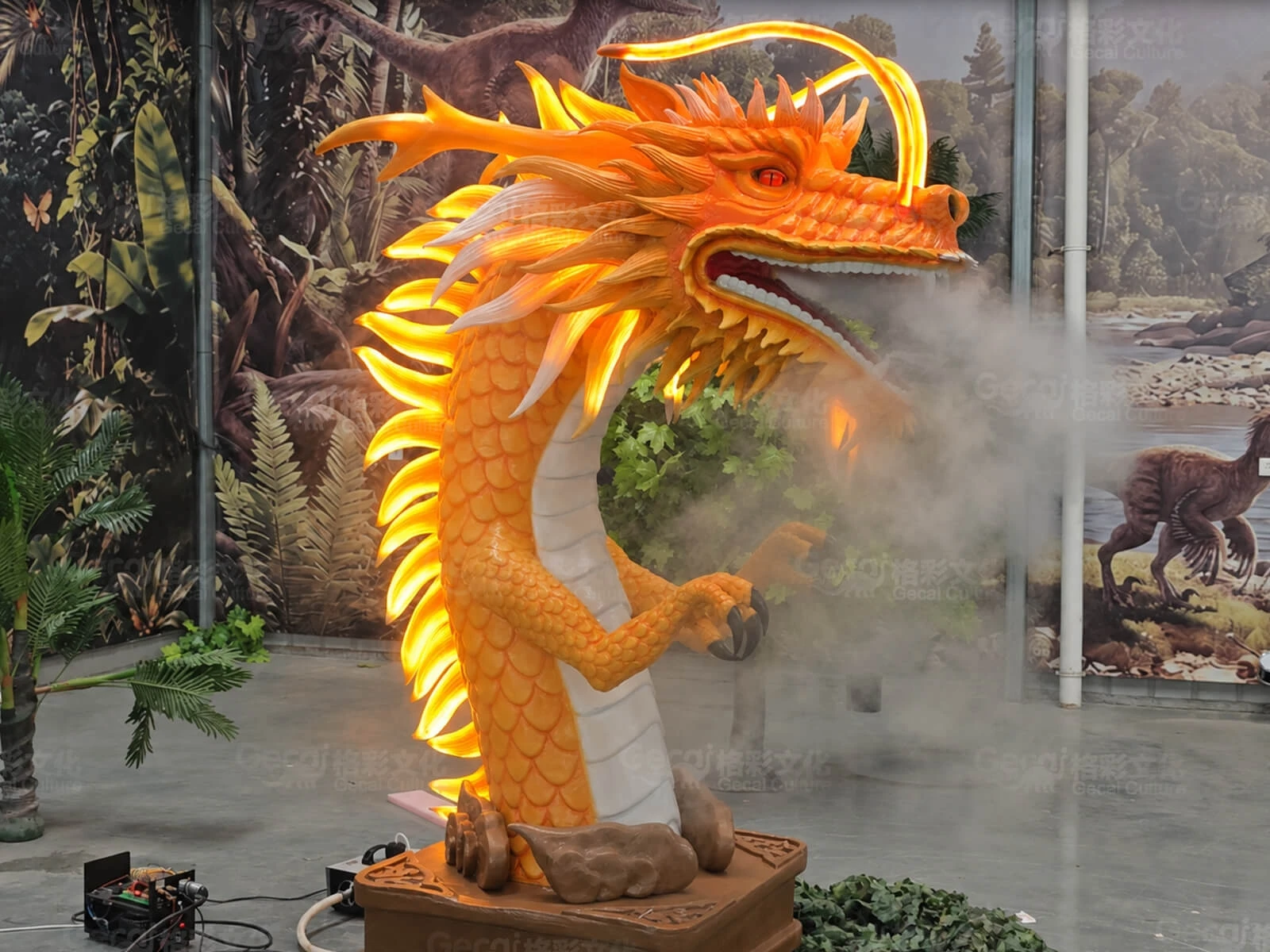
The finished product presents a powerful Chinese dragon emerging from a decorative base. The raised head, open mouth and front claws create an active pose, while the illuminated horns and neck spines make the model easy to recognize from a distance.
This type of custom animatronic dragon can be used in:
Theme parks
Cultural tourism attractions
Shopping malls
Museums
Festivals and holiday events
Resort entrances
Stage backgrounds
Interactive photo areas
Its size, posture, colors, lighting and effects can be adjusted to suit different themes and venue requirements.
Frequently Asked Questions
Can the dragon’s size and color be customized?
Yes. The dimensions, posture, scale colors, facial style and base design can be adjusted according to the installation space and project theme.
Can lighting and mist be added?
Yes. Lighting can be installed in the horns, eyes, spines or other decorative areas. A mist effect can also be integrated into the mouth when required.
Can the dragon have movements?
Movements such as head turning, mouth opening, neck movement and claw movement can be considered. The final motion system depends on the product size, design and budget.
What information should buyers provide?
Buyers should provide the required size, installation location, venue photos, preferred style, movements, effects, local voltage and expected delivery schedule.
Conclusion
Creating a custom animatronic Chinese dragon involves close coordination between artistic design and mechanical engineering. From the initial concept and 3D model to the steel frame, sculpting, painting, lighting, effects and final testing, every stage affects the finished result.
This project demonstrates how a traditional cultural subject can be transformed into a distinctive animatronic attraction. Gecai Culture can customize the dragon’s dimensions, appearance, movements, lighting, mist effects and display base according to different venue requirements.
For a custom project, send us your venue dimensions, reference images, preferred effects and installation schedule. We can develop a suitable design and production proposal.
WhatsApp: +8618990006494
Email: lisaxiong@gecaiculture.com
Tags:
- No Data Available