About us
Gecai Culture stands at the forefront of bringing the past to life through our state-of-the-art Animatronic Dinosaurs, enchanting Animatronic Creatures, vibrant Chinese Festival Lanterns, and tailored Custom Products. As a professional manufacturer nestled in the heart of China, we harbor a deep-seated passion for showcasing our lifelike dinos and animals in museums, exhibitions, zoos, parks, and beyond, aiming to kindle a flame of curiosity and learning in people of all ages.
Get a free quote
Company News
How to Plan a Traveling Animatronic Dinosaur Exhibition
A traveling animatronic dinosaur exhibition must be designed for repeated transportation, fast installation and different venue conditions. The best product combination is not always the largest collection. It is a balanced group of modular dinosaurs, interactive products and photo attractions that can be packed, moved and reassembled efficiently.
Planning should begin with the exhibition schedule, visitor route, venue access and operating requirements—not just the dinosaur species.
Define the Exhibition Format
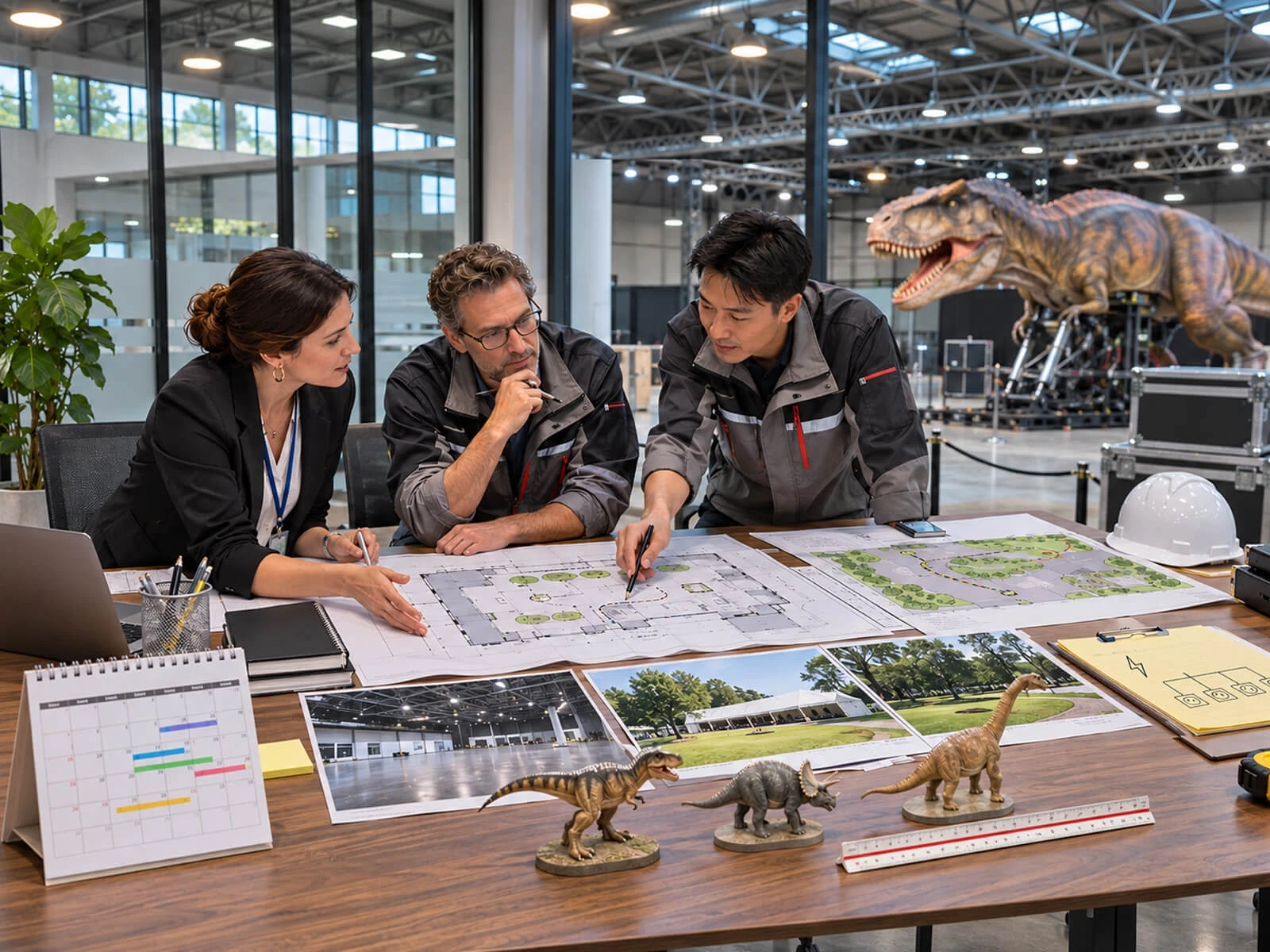
First, determine how the exhibition will operate:
Indoor, outdoor or both
One venue or multiple cities
Exhibition duration at each location
Expected visitor age and capacity
Available installation time
Local staff and lifting equipment
Power supply at each venue
Storage between events
An indoor museum exhibition has different requirements from an outdoor festival or shopping mall tour. Ceiling height, entrance width, loading access and available floor space may also change between venues.
If the venues are not confirmed, choose products that can adapt to several layouts instead of creating one fixed arrangement.
Choose a Practical Product Mix
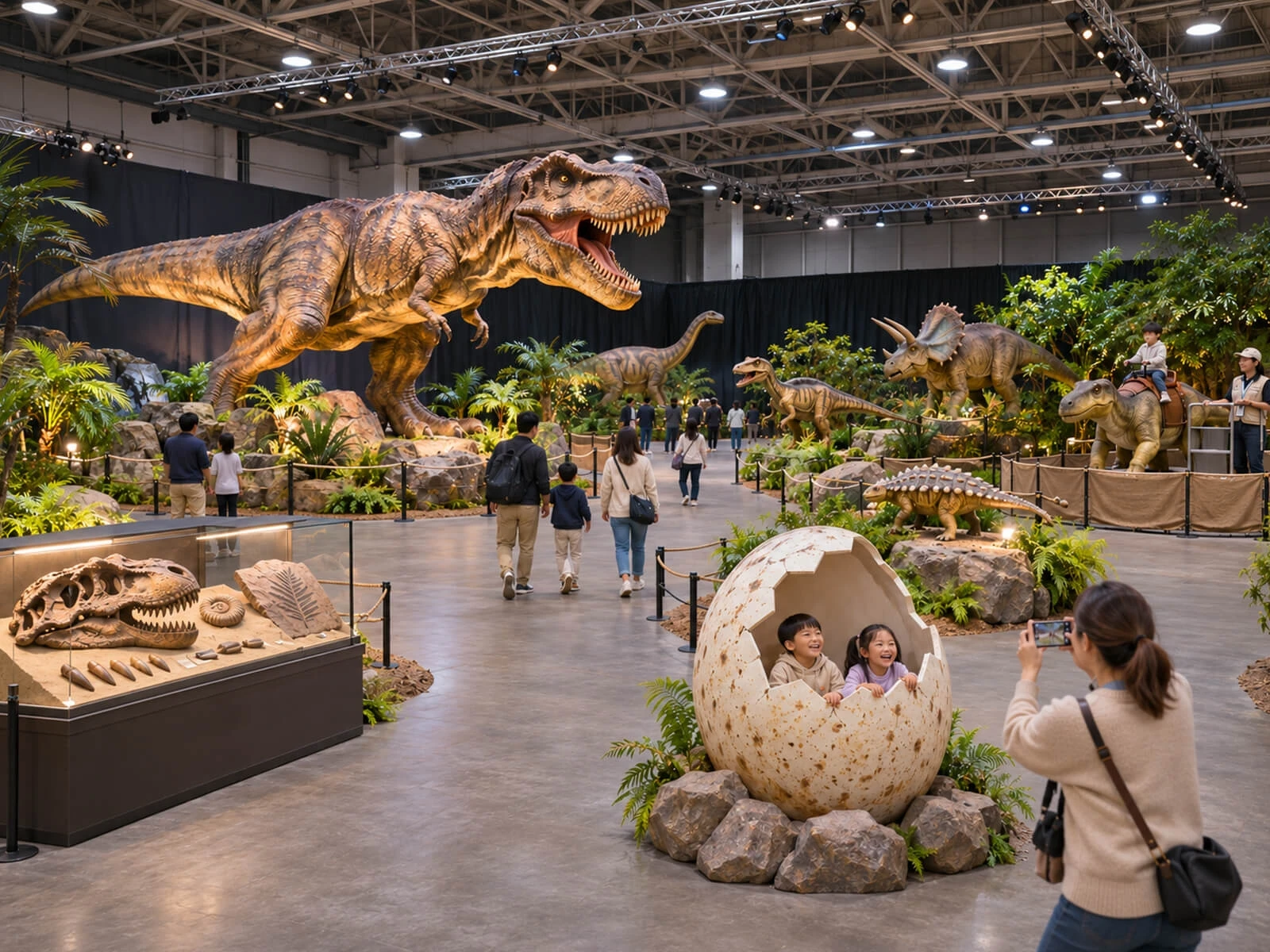
A traveling exhibition usually works better with different product sizes and functions rather than many similar dinosaurs.
| Exhibition Area | Suitable Products |
|---|---|
| Entrance | One landmark dinosaur |
| Main route | Medium animatronic dinosaurs |
| Close-viewing area | Small dinosaurs or dinosaur families |
| Photo area | Dinosaur egg, nest or themed backdrop |
| Interactive area | Dinosaur ride, puppet or costume |
| Educational area | Fossil replicas and information displays |
One large T-Rex or long-necked dinosaur can create a strong visual landmark. Medium and small dinosaurs are easier to position along the route and may require less lifting space.
Buyers can use our guide on how many animatronic dinosaurs a park or exhibition needs to estimate the appropriate quantity.
Plan the Visitor Route
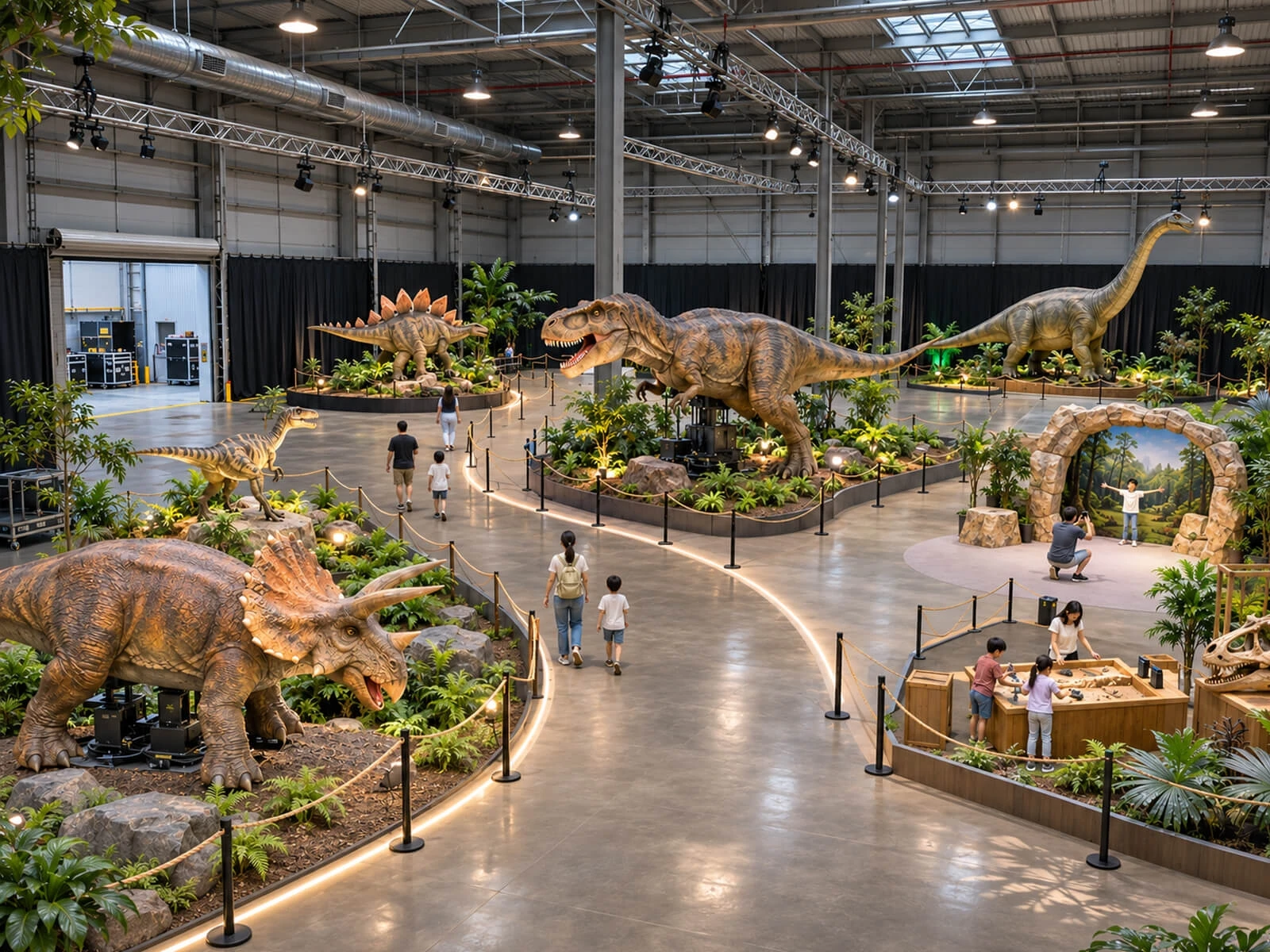
The visitor route should be planned before the final product list is confirmed.
Mark the following areas on the venue layout:
Entrance and exit
Main viewing points
Emergency and service routes
Photo areas
Interactive zones
Control equipment
Staff access
Maintenance space
Each moving dinosaur needs sufficient clearance around its head, neck, limbs and tail. Barriers should prevent visitors from entering the movement area without blocking the main view.
Photo attractions and interactive products should be positioned away from narrow paths. This prevents waiting visitors from interrupting the main flow of the exhibition.
Design the Dinosaurs for Repeated Transport
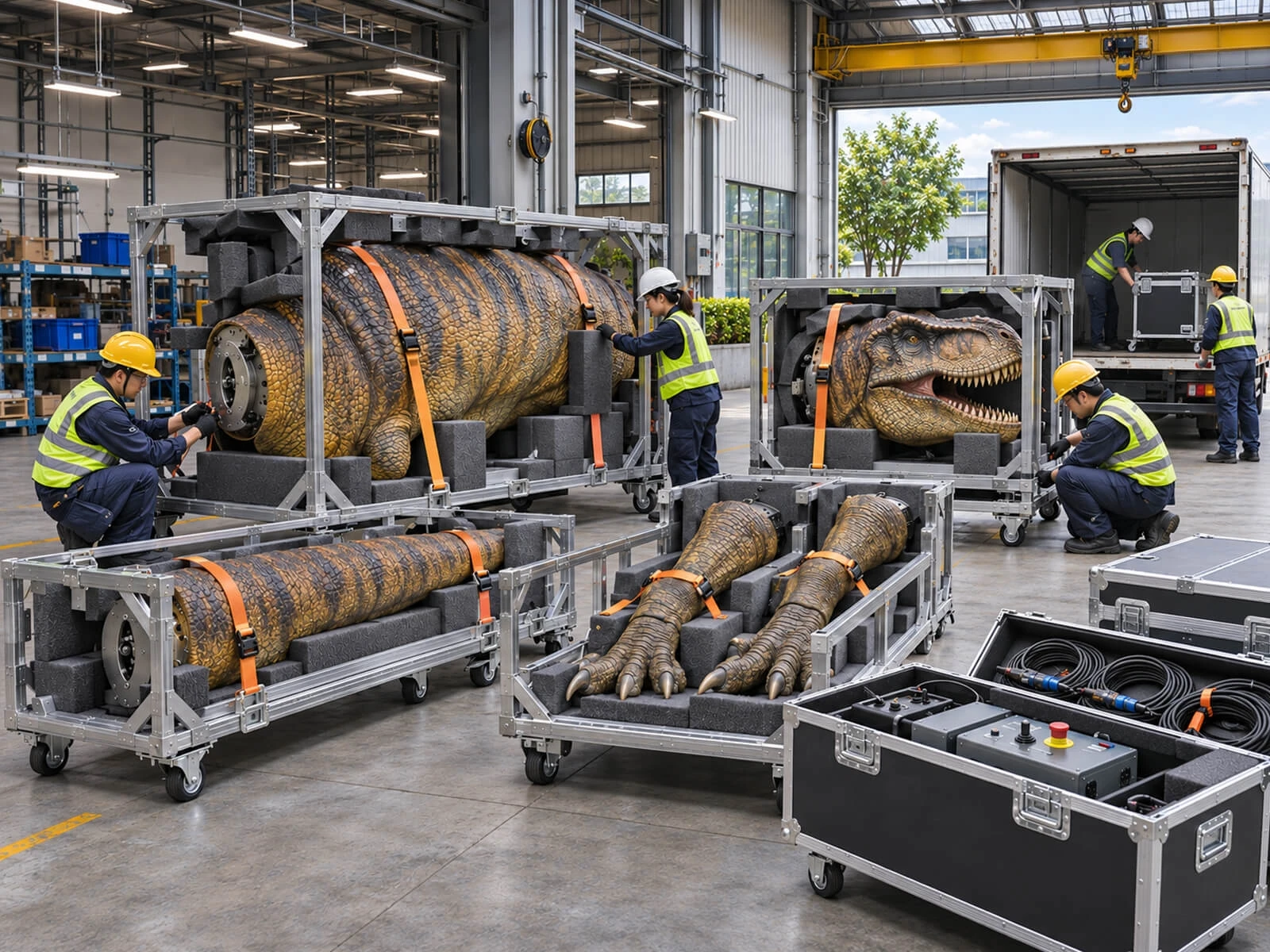
Large animatronic dinosaurs are normally separated into transportable sections. Depending on the product, these may include the body, legs, tail, neck, head and base.
For a traveling exhibition, the manufacturer should consider:
Section dimensions and weight
Container or truck space
Venue entrance dimensions
Clearly labeled structural connections
Matching internal cables
Reusable protective packaging
Surface areas that require repair after assembly
Equipment needed for lifting
Repeated transportation increases the importance of durable connection points and organized packaging. Each accessory, cable and control box should have a fixed packing position and identification label.
For more information, see our guide to international animatronic dinosaur shipping.
Prepare Every Venue Before Arrival
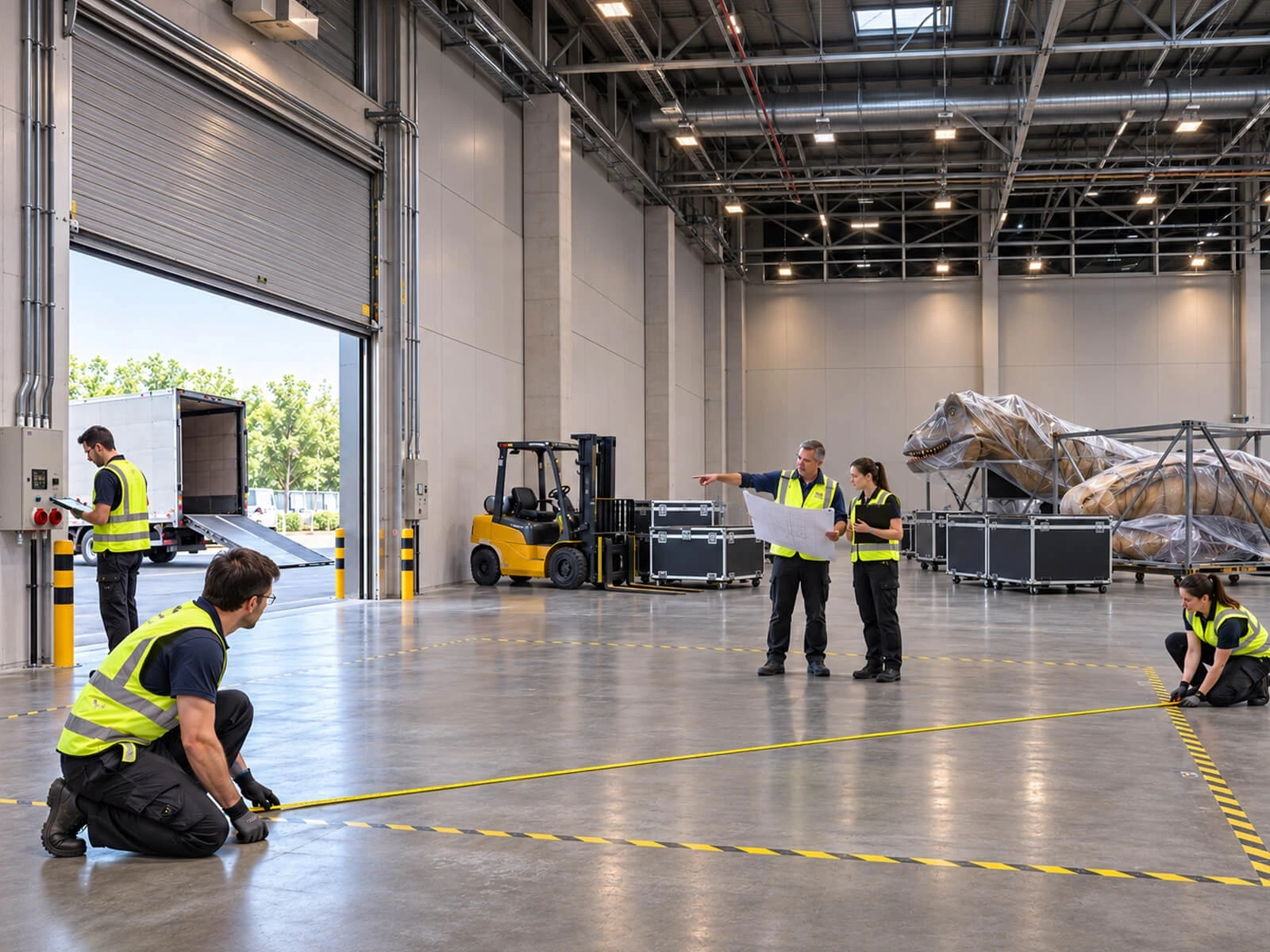
Before the exhibition reaches a new venue, confirm that the site is ready for unloading, assembly and testing.
The local organizer should provide:
Venue measurements and layout
Entrance and loading-area dimensions
Correct voltage and plug type
Power outlet and cable locations
Ground or floor conditions
Crane, forklift or lifting access
Indoor or outdoor installation
Weather and drainage information
Installation and removal schedule
Control boxes and cables should be positioned away from visitors and protected from vehicles, cleaning equipment and standing water.
Large dinosaurs may require lifting equipment and experienced installers. The complete process is explained in our animatronic dinosaur installation guide.
Plan Daily Operation and Maintenance
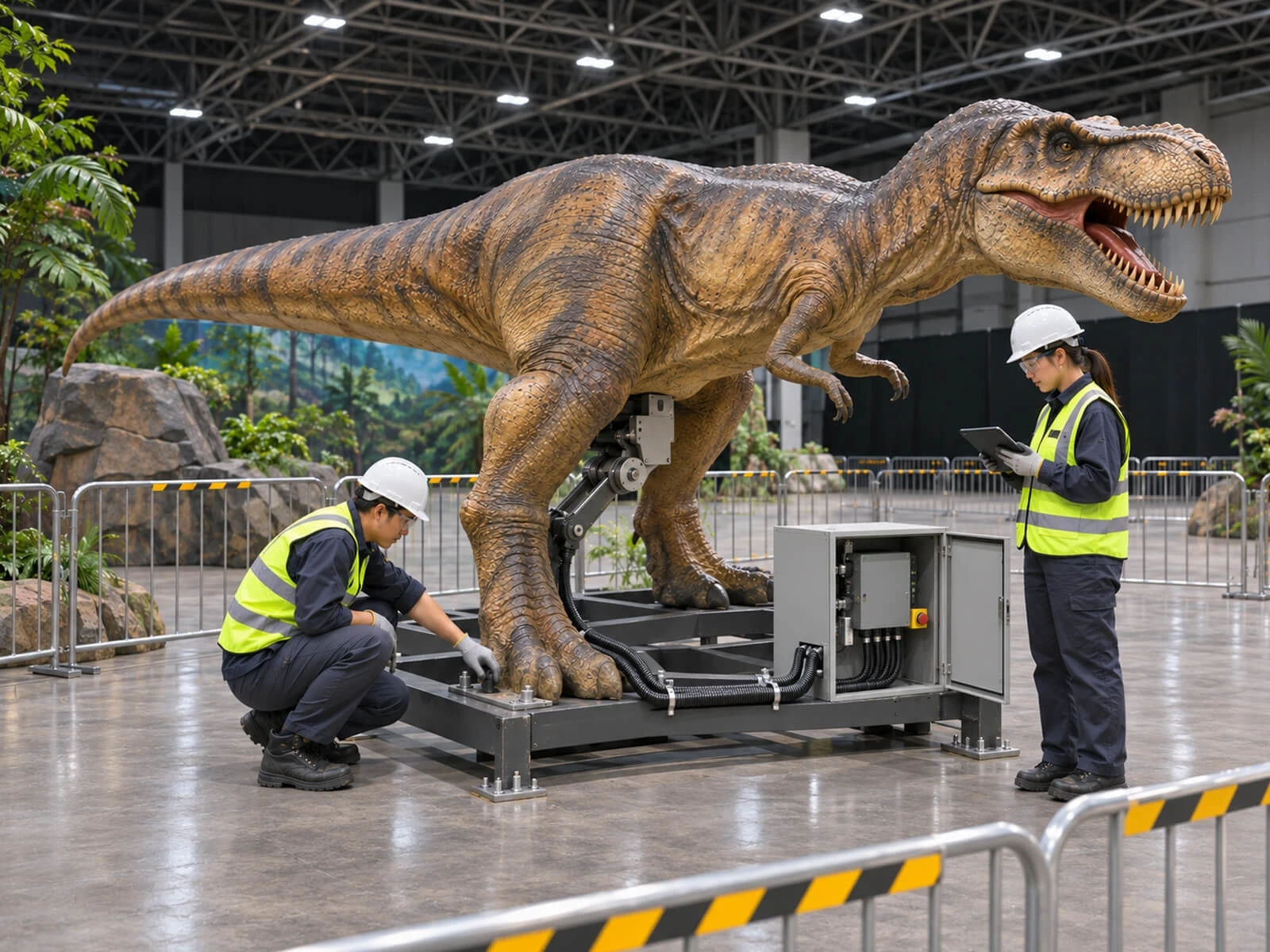
A traveling exhibition needs a clear operating routine at every venue.
Before opening each day, staff should check:
Base stability and fixing points
Cables and electrical connections
Movement range
Sound and control functions
Surface condition
Barriers and visitor clearance
Emergency-stop function
The models should complete a full test cycle before visitors enter. If a dinosaur produces unusual noise, vibration or movement, it should be stopped and inspected.
Useful spare parts may include suitable fuses, sensors, switches, relays, cables and surface repair materials. The exact spare-parts list should match the control system and mechanical configuration of the products.
Make the Exhibition Easy to Reconfigure
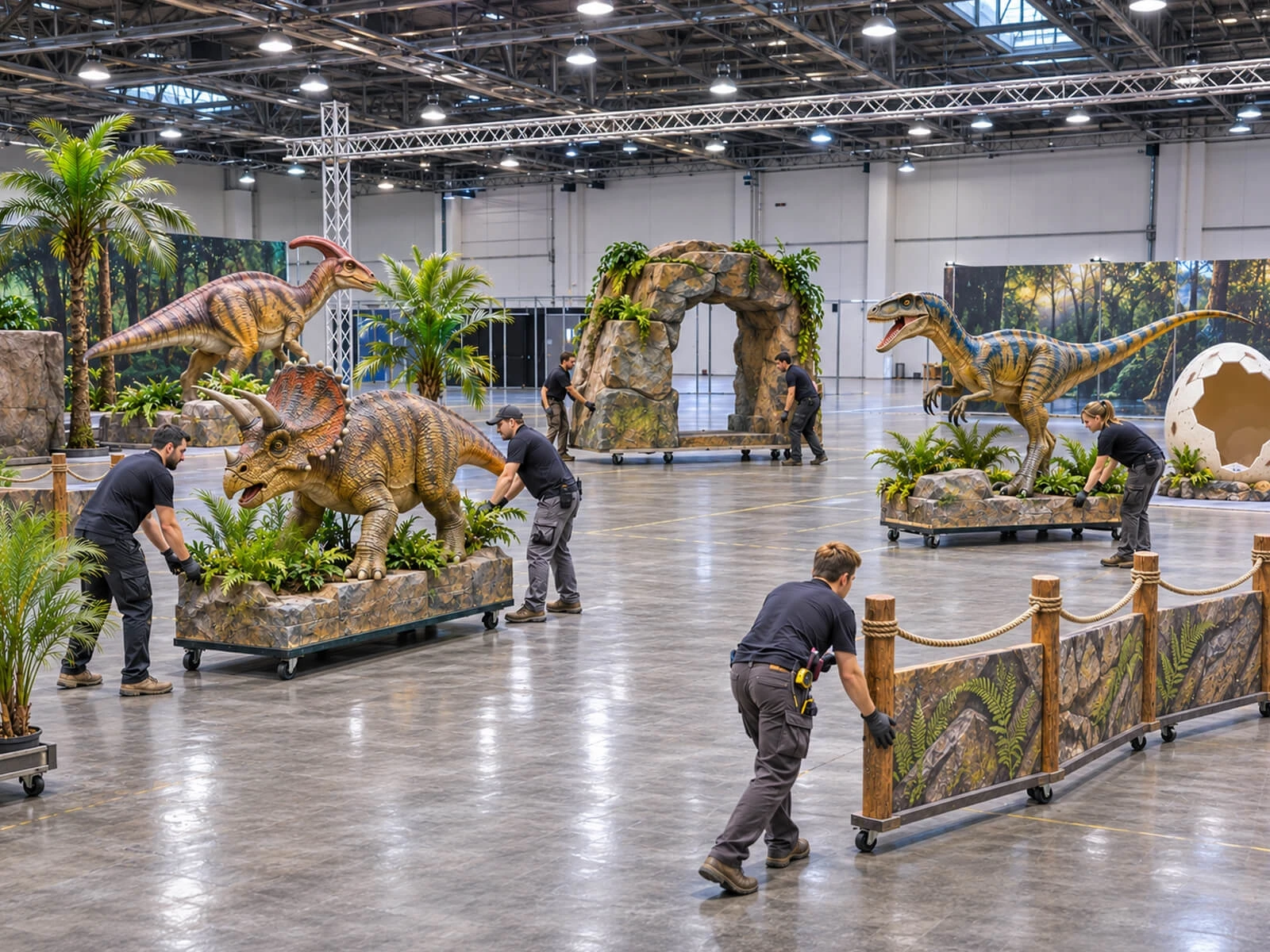
Different venues rarely have identical layouts. A modular exhibition should allow the product positions and route to change without affecting the overall experience.
For example, the same collection could use:
A large dinosaur as an outdoor entrance feature
Medium dinosaurs along an indoor route
Costumes or puppets for scheduled performances
Rides in a staffed interactive zone
Photo props near the exit
Fossil replicas in an educational area
Portable scenery, artificial plants and themed barriers can help connect the individual displays without requiring permanent construction.
What Information Should Buyers Provide?
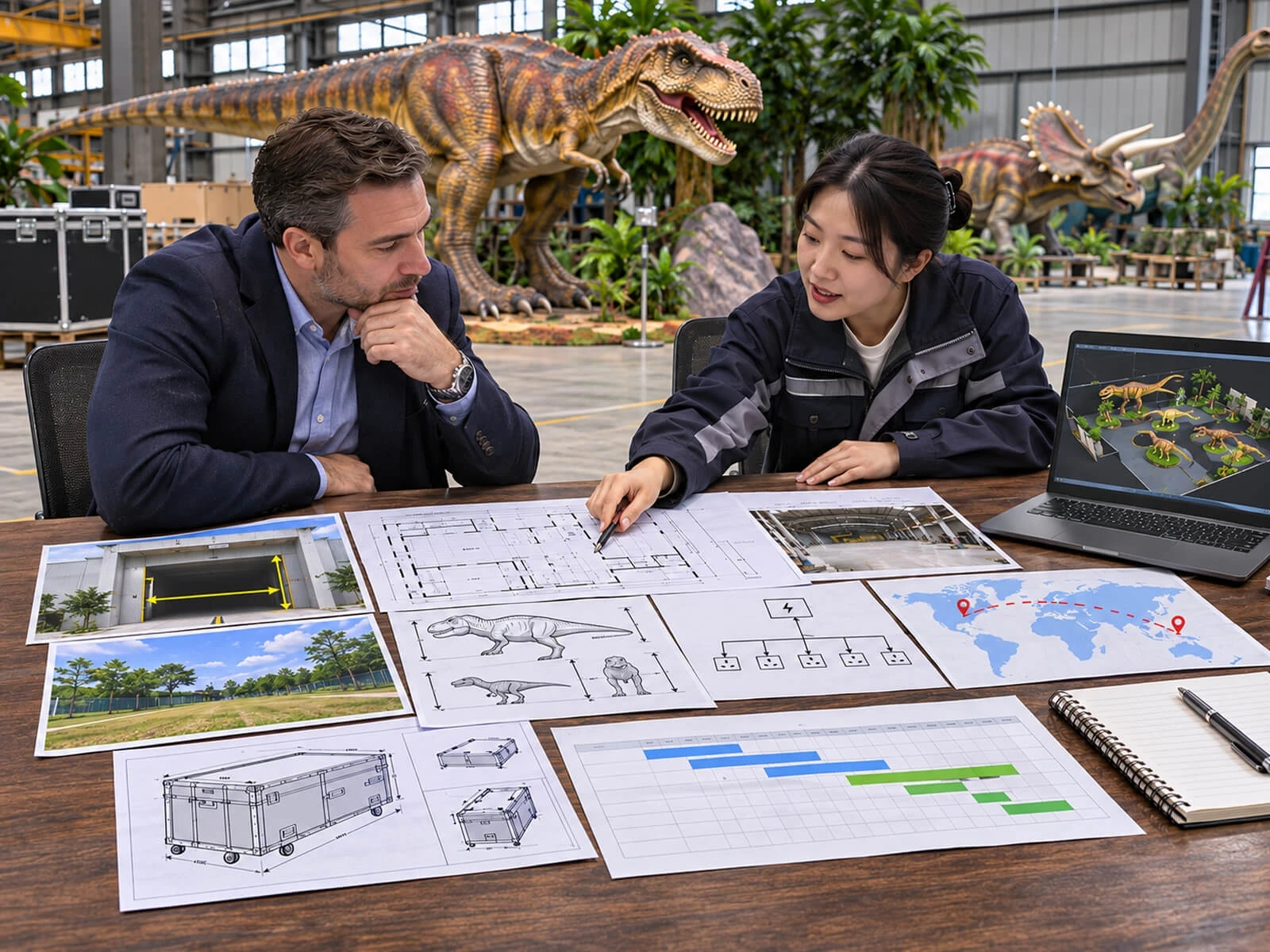
To plan a traveling animatronic dinosaur exhibition, provide the manufacturer with:
Number and location of planned venues
Indoor or outdoor use
Venue drawings and entrance dimensions
Preferred dinosaur species and sizes
Required movements and effects
Interactive product requirements
Available transport method
Installation time at each venue
Power supply
Exhibition opening date
If some venues are still being selected, provide the minimum entrance size, ceiling height and installation space that the collection must accommodate.
Frequently Asked Questions
How many dinosaurs does a traveling exhibition need?
There is no fixed number. The quantity depends on the route length, venue size, dinosaur dimensions and number of interactive areas. A smaller, well-planned collection may be more practical than a crowded exhibition.
Can the same dinosaurs be installed at different venues?
Yes. The models should be designed with suitable separation points, labeled cables, reusable packaging and adaptable bases. Every new venue must still be checked before installation.
Should a traveling exhibition include interactive products?
Interactive products can improve visitor participation, but they may require trained staff and separate operating areas. Dinosaur costumes, puppets, rides and photo props should be selected according to the audience and daily operating plan.
Conclusion
A successful traveling animatronic dinosaur exhibition combines visual impact with practical transportation and installation.
Choose a modular product mix, plan the visitor route, confirm access and power at every venue, and prepare reusable packaging, spare parts and installation guidance. These decisions help the exhibition move between locations with less disruption.
Send Gecai Culture your planned venues, available dimensions, preferred animatronic dinosaurs, interactive products, destination and opening schedule for a suitable traveling exhibition proposal.
Tags:
- No Data Available